
AAC Devices: What Parents Need to Know
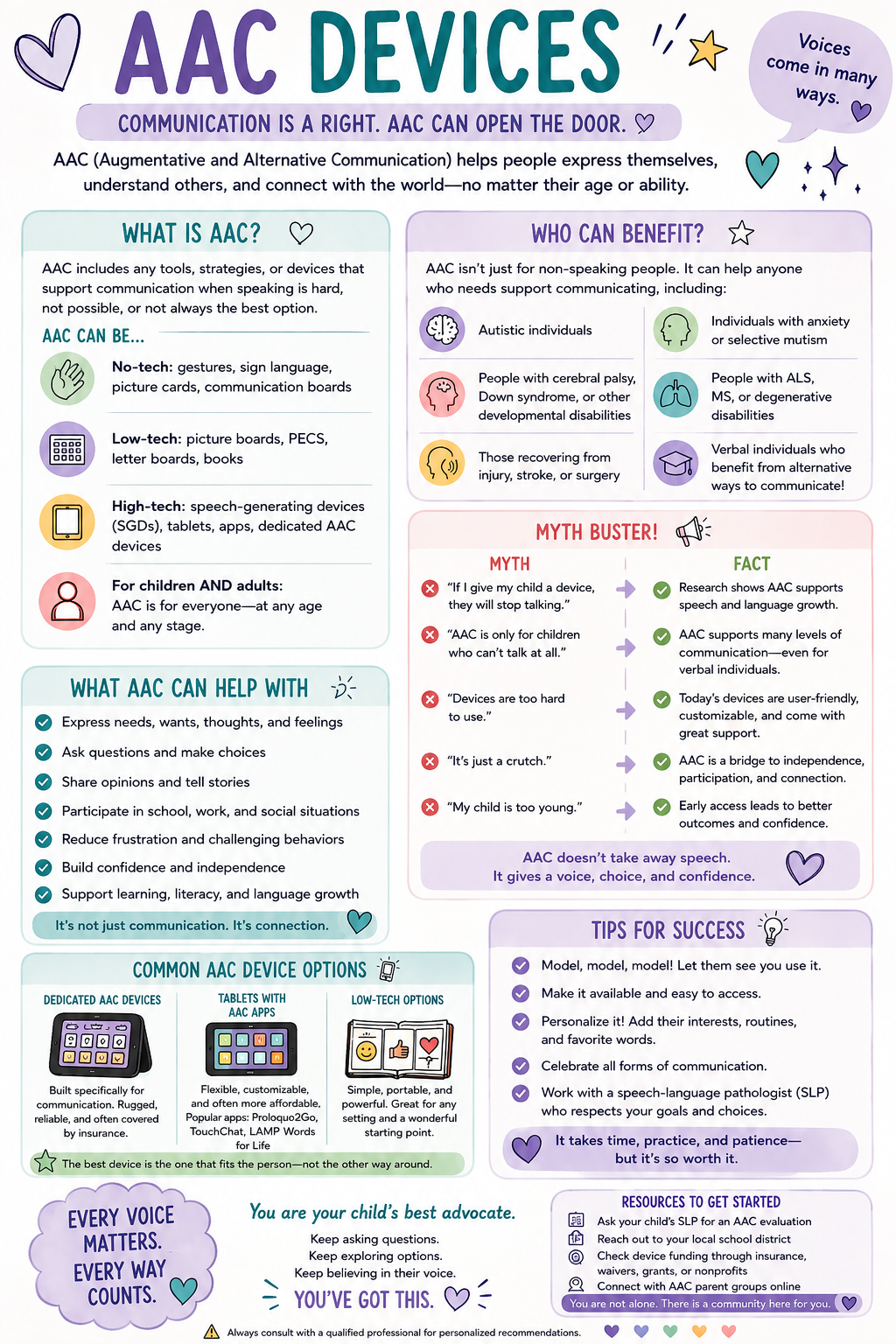
AAC can give children another way to communicate their wants, needs, thoughts, and feelings. Learn what AAC is, the different forms it can take, and why it doesn't prevent speech development.
Augmentative and alternative communication (AAC) can give children additional ways to express wants, needs, thoughts, feelings, and ideas. AAC can include speech-generating devices, communication apps, picture systems, signs, gestures, and other communication tools. It can be used alongside spoken language or as an alternative when speech isn't meeting a child's communication needs.
What you'll learn
What AAC means
Different types of AAC
Who may benefit from AAC
How AAC can support everyday communication
Why AAC does not mean giving up on spoken language
Why children don't have to be a certain age to begin using AAC
Why the right communication system should be individualized
Quick Tip: AAC isn't a last resort. If a child is having difficulty communicating, AAC can provide another way to communicate while their other communication skills continue developing.
Disclaimer: This resource is for general educational purposes only and is not medical, speech-language, or professional advice. AAC systems should be selected and supported based on the individual child's communication needs and abilities. A speech-language pathologist and other qualified professionals can help evaluate communication needs and determine appropriate supports.
Found this helpful?
Share it with a friend, family member, or caregiver who might benefit.
New free resources are added regularly to the Maternal Menace Resource Library.
When It’s Okay to Say No: Advocating for Your Child
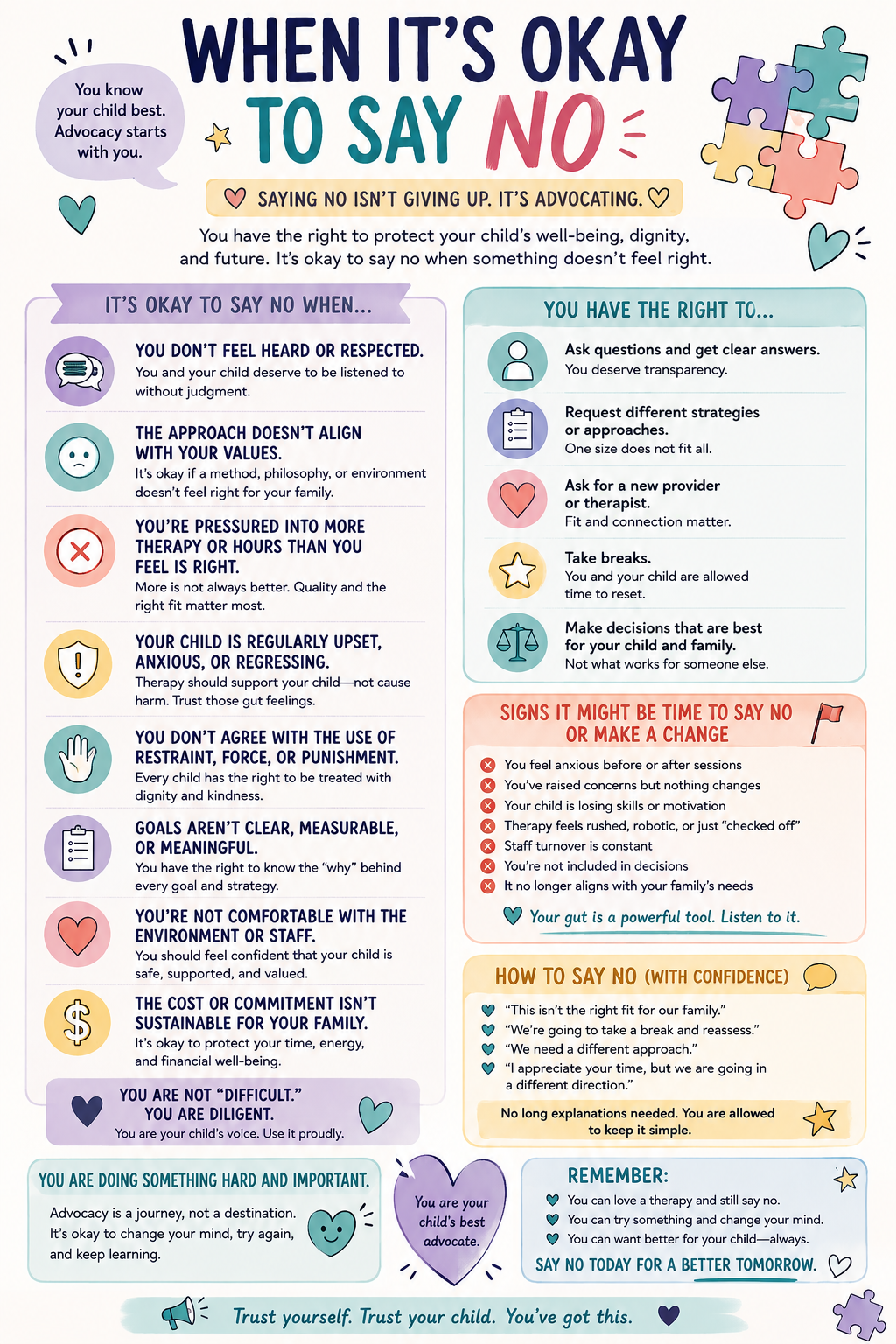
You don't have to say yes to every therapy or service offered. Learn when it may be reasonable to ask questions, request changes, seek a different provider, or say no.
Saying yes to every therapy or service offered isn't a requirement of being a good parent. Autism supports should have meaningful goals, be individualized, and consider the child and family's needs. This resource explores situations where it may be reasonable to pause, ask questions, request changes, seek another provider, or say no.
What you'll learn
Why you don't have to automatically accept every service offered
Questions to ask about a therapy's goals and purpose
When a therapy may not be a good fit
Why your child's comfort and well-being matter
When it's reasonable to request changes or a different provider
How to advocate for your child's needs
Why saying no to one service doesn't mean saying no to support altogether
Quick Tip: Ask: “What is the goal, how will we know if it's helping, and what happens if we decide it isn't working?” A good care team should be willing to discuss those questions with you.
Disclaimer: This resource is for general educational purposes only and is not medical, legal, or professional advice. Decisions about therapies and services should consider the individual child's needs, goals, safety, preferences, and circumstances. When appropriate, discuss concerns and alternatives with your child's healthcare or therapy team.
Found this helpful?
Share it with a friend, family member, or caregiver who might benefit.
New free resources are added regularly to the Maternal Menace Resource Library.
Autism Therapies & Tips
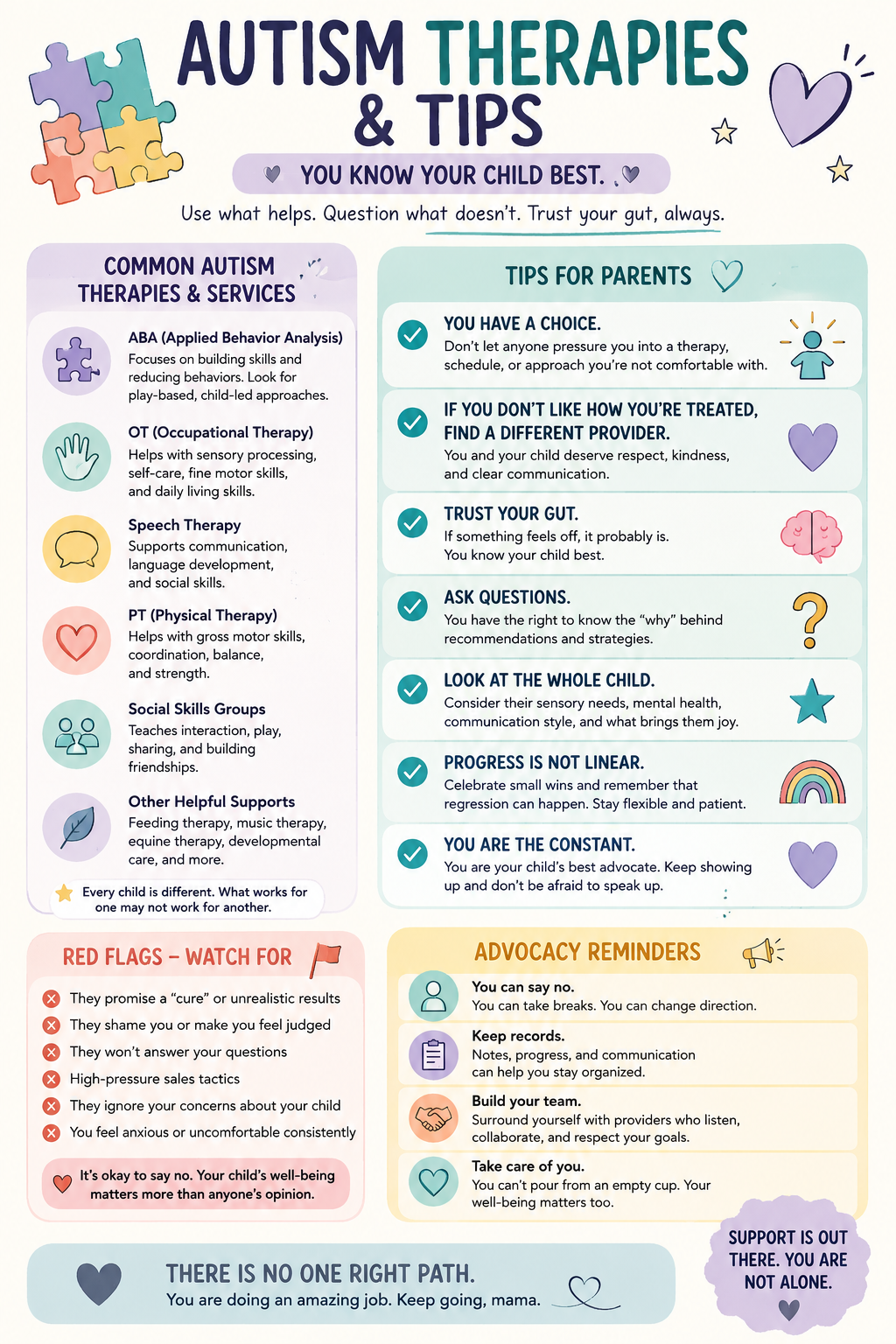
Autism therapy isn't one-size-fits-all. Learn about common therapies, practical caregiver strategies, and why individualized goals and the right fit matter.
Exploring autism therapies can feel overwhelming, especially when every child has different strengths, needs, communication styles, and goals. This infographic introduces common therapy options and practical tips for helping families understand and support their autistic child.
What you'll learn
Common therapies and supports used with autistic children
What speech therapy can support
What occupational therapy can support
How behavioral and developmental approaches may be used
Why therapy goals should be individualized
Practical ways caregivers can support skills at home
Why finding the right fit matters more than simply doing more therapy
Quick Tip: More therapy isn't automatically better. Look at what the therapy is helping your child do, how your child responds to it, and whether the goals actually matter to your child's daily life.
Disclaimer: This resource is for general educational purposes only and is not medical advice, diagnosis, or treatment. Autism therapies and supports should be individualized to the child's needs, goals, preferences, and circumstances. Talk with your child's healthcare providers and qualified therapists when deciding which services or interventions may be appropriate.
Found this helpful?
Share it with a friend, family member, or caregiver who might benefit.
New free resources are added regularly to the Maternal Menace Resource Library.
Sensory Play for Toddlers: 10 Easy Activities for Learning Through Play
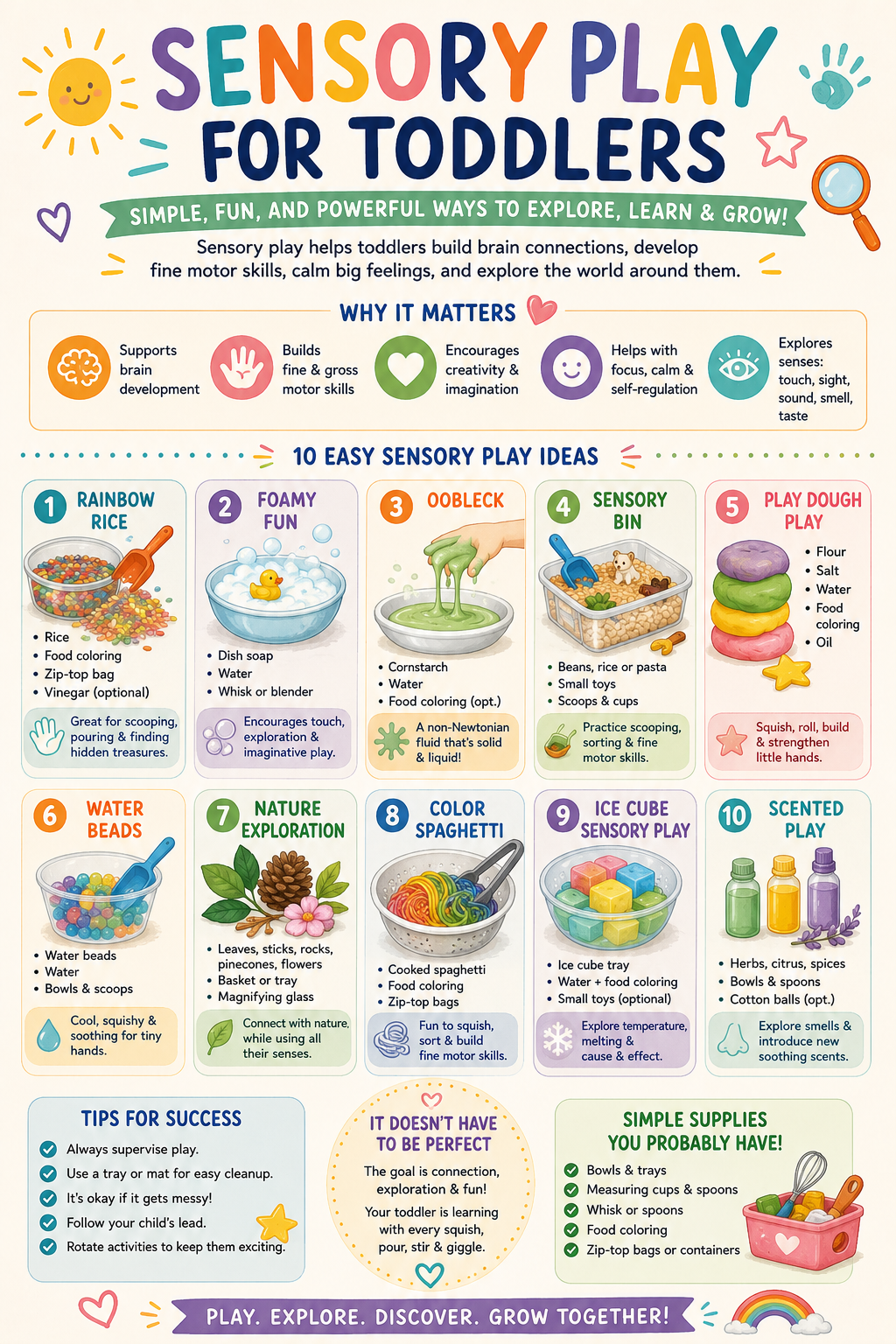
Help your toddler learn through play with these 10 simple sensory activities. Explore fun, low-cost ideas that build fine motor skills, creativity, self-regulation, and early learning using everyday materials.
Sensory play is one of the best ways toddlers learn about the world around them. This infographic features 10 simple sensory activities using inexpensive, everyday materials to support brain development, motor skills, creativity, and self-regulation through hands-on exploration.
What you'll learn
Easy sensory activities you can set up in minutes
How sensory play supports toddler development
Budget-friendly sensory bin and play ideas
Ways to encourage creativity, problem-solving, and fine motor skills
Simple supplies you probably already have at home
Quick Tip: Use a tray, towel, or plastic tablecloth for easier cleanup.
Disclaimer: This resource is for educational purposes only and is not a substitute for medical, developmental, or therapeutic advice. Always supervise children during sensory activities and choose materials appropriate for their age, developmental level, allergies, and individual sensory needs.
Found this helpful?
Share it with a friend, family member, or caregiver who might benefit.
New free resources are added regularly to the Maternal Menace Resource Library.