
AAC Devices: What Parents Need to Know
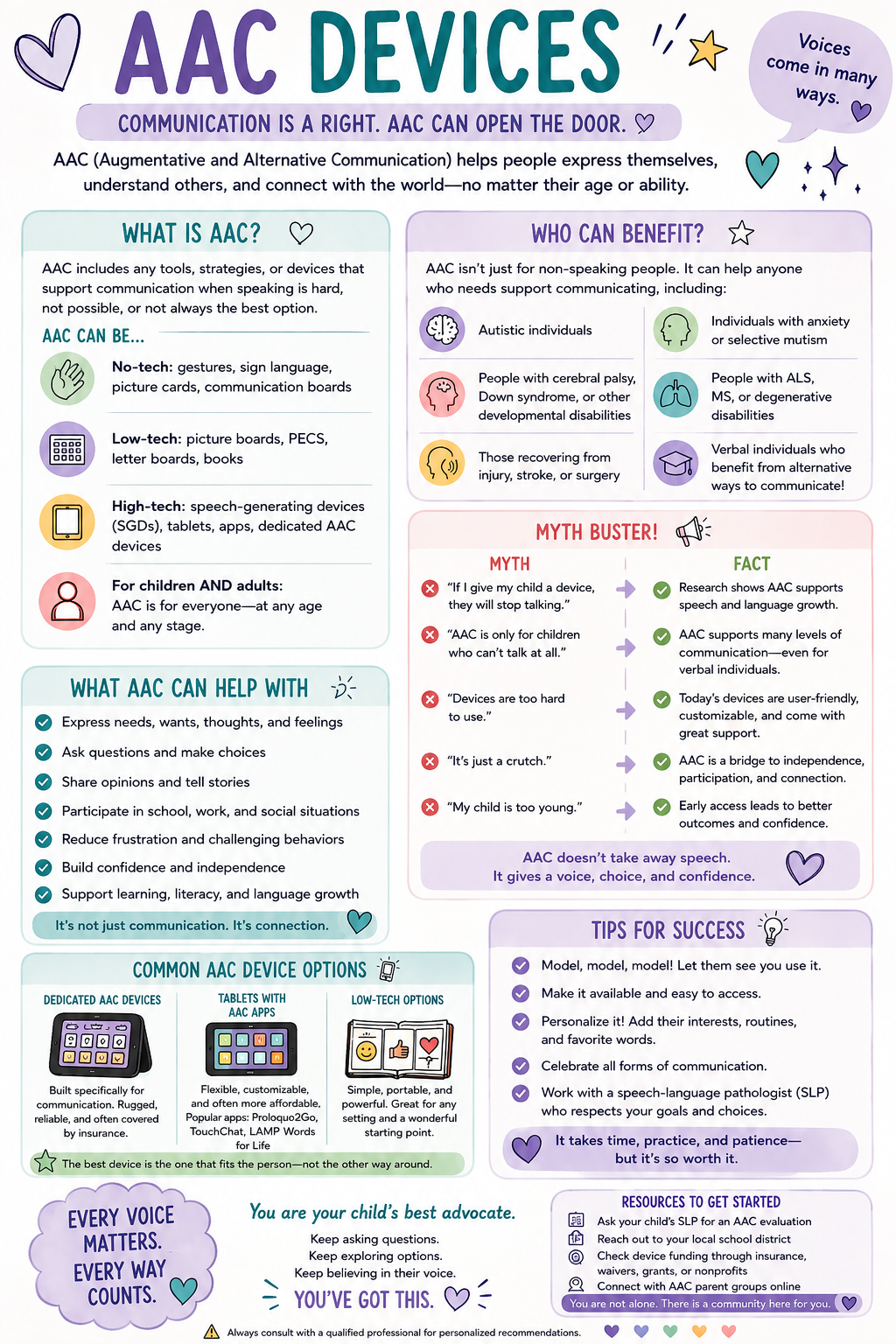
Augmentative and alternative communication (AAC) can give children additional ways to express wants, needs, thoughts, feelings, and ideas. AAC can include speech-generating devices, communication apps, picture systems, signs, gestures, and other communication tools. It can be used alongside spoken language or as an alternative when speech isn't meeting a child's communication needs.
What you'll learn
What AAC means
Different types of AAC
Who may benefit from AAC
How AAC can support everyday communication
Why AAC does not mean giving up on spoken language
Why children don't have to be a certain age to begin using AAC
Why the right communication system should be individualized
Quick Tip: AAC isn't a last resort. If a child is having difficulty communicating, AAC can provide another way to communicate while their other communication skills continue developing.
Disclaimer: This resource is for general educational purposes only and is not medical, speech-language, or professional advice. AAC systems should be selected and supported based on the individual child's communication needs and abilities. A speech-language pathologist and other qualified professionals can help evaluate communication needs and determine appropriate supports.
Found this helpful?
Share it with a friend, family member, or caregiver who might benefit.
New free resources are added regularly to the Maternal Menace Resource Library.
