
Kids Routine & Visual Schedule Toolkit: Free Printable Daily Routine Pack
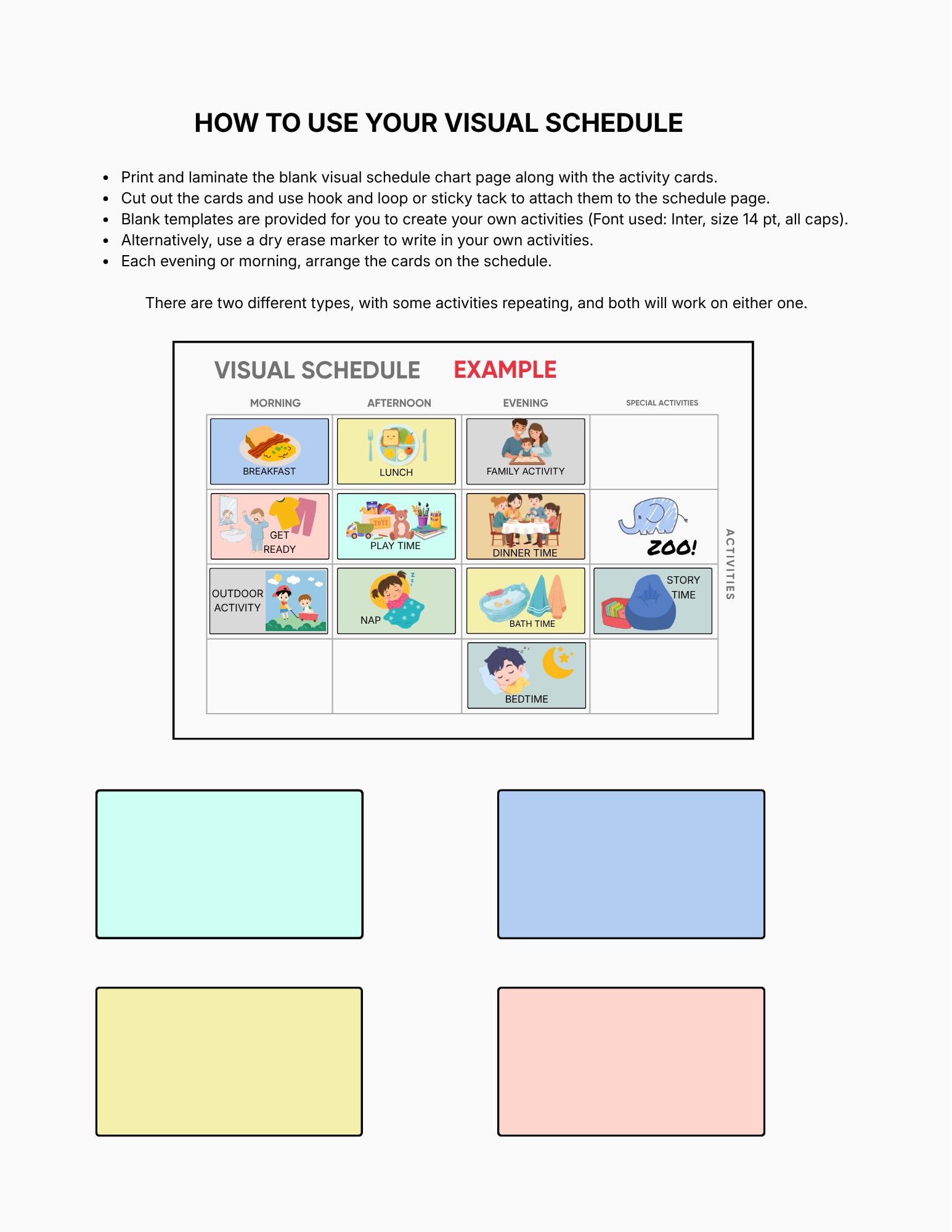
Download this free Kids Routine & Visual Schedule Toolkit featuring reusable visual schedules, printable routine cards, chore charts, daily planners, weekly schedules, and organization tools for children.
Creating predictable routines can help children feel more confident, independent, and prepared for each day. The Kids Routine & Visual Schedule Toolkit is a free printable resource featuring customizable visual schedules, routine cards, daily checklists, chore charts, planners, and organization tools to help families build consistent routines at home.
Designed for parents, caregivers, educators, and therapists, this toolkit includes reusable visual schedule cards, printable planners, weekly schedules, and child-friendly organization pages that can be customized to fit your family's needs.
What you'll learn
Build predictable daily routines with visual schedules.
Encourage independence through consistent routines.
Customize activity cards for your child's schedule.
Create morning, afternoon, and bedtime routines.
Introduce age-appropriate chores and responsibilities.
Help children stay organized with planners and checklists.
Quick Tip: Laminate the schedule pages and activity cards, then use hook-and-loop dots (Velcro), magnets, or reusable adhesive so children can move activities throughout the day as routines change.
Related resources will be added as our library continues to grow.
Disclaimer: This toolkit is intended for educational and organizational purposes only. Every child learns differently, so feel free to customize routines, schedules, and expectations to fit your child's developmental level and individual needs.
Found this helpful?
Share it with a friend, family member, or caregiver who might benefit.
New free resources are added regularly to the Maternal Menace Resource Library.
Parent Advocate Script Library: 40+ Ready-to-Use Advocacy Scripts
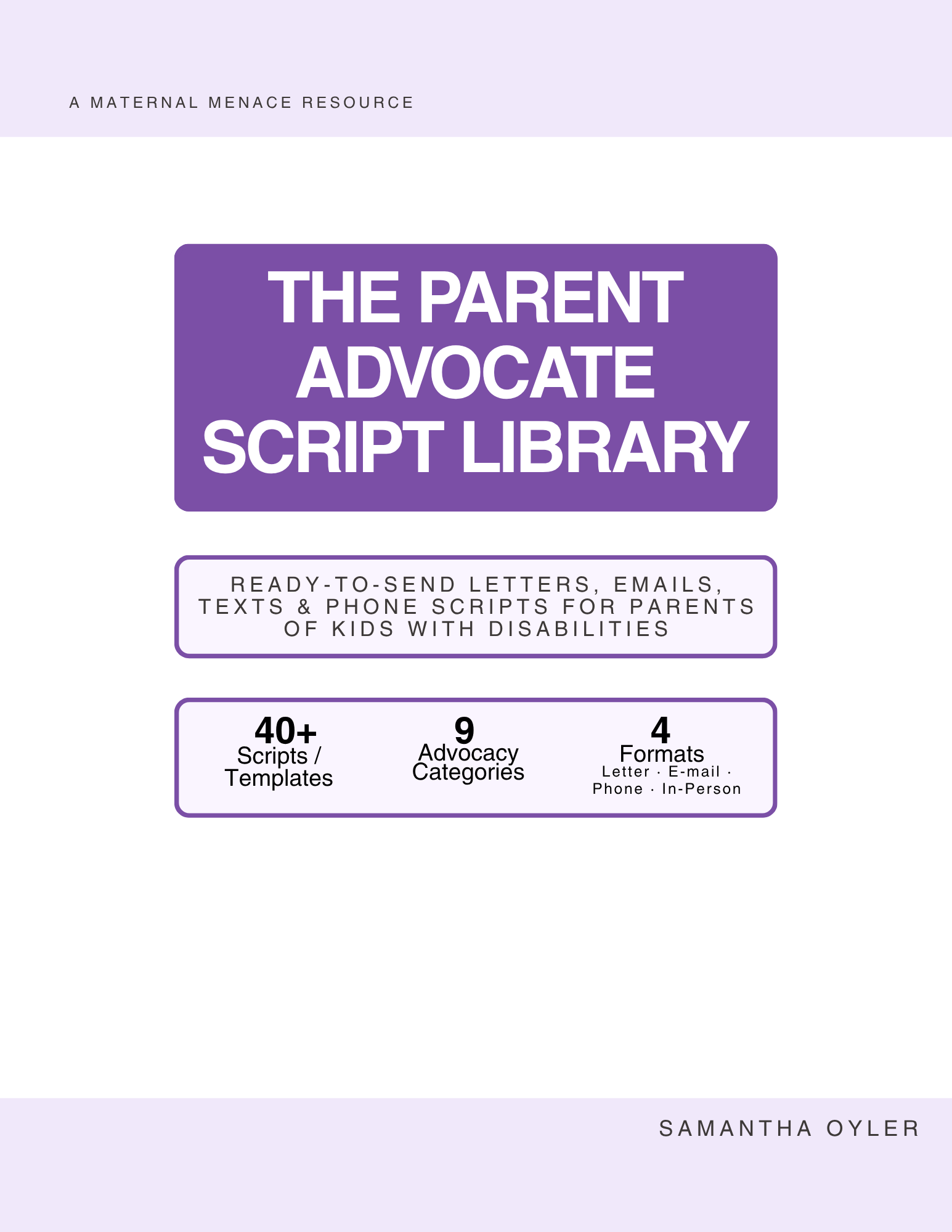
Download this free Parent Advocate Script Library featuring 40+ customizable letters, emails, phone scripts, text messages, and conversation templates to help parents confidently advocate for their children.
Advocating for your child can be intimidating, especially when you're navigating schools, therapy providers, insurance companies, or government agencies. The Parent Advocate Script Library provides over 40 ready-to-use scripts to help you communicate clearly and confidently.
Inside you'll find customizable letters, emails, text messages, phone scripts, and in-person conversation starters covering a variety of common advocacy situations. Simply personalize the templates to fit your family's needs and use them as a starting point for productive conversations.
What you'll learn
Communicate confidently with schools and service providers.
Adapt scripts for emails, phone calls, text messages, and letters.
Request evaluations, services, accommodations, and meetings.
Document concerns professionally and clearly.
Advocate for your child's needs while maintaining organized communication.
Quick Tip: Save your most-used scripts in your phone, email drafts, or notes app. Having them readily available can reduce stress and make it easier to respond quickly when situations arise.
Related resources will be added as our library continues to grow.
Disclaimer: These templates are intended for educational and informational purposes only and do not constitute legal advice. Every situation is unique. Consider consulting a qualified attorney, advocate, or educational professional for guidance specific to your circumstances.
Found this helpful?
Share it with a friend, family member, or caregiver who might benefit.
New free resources are added regularly to the Maternal Menace Resource Library.
IEP Follow-Up System: Free Printable IEP Tracking & Organization Toolkit (3)
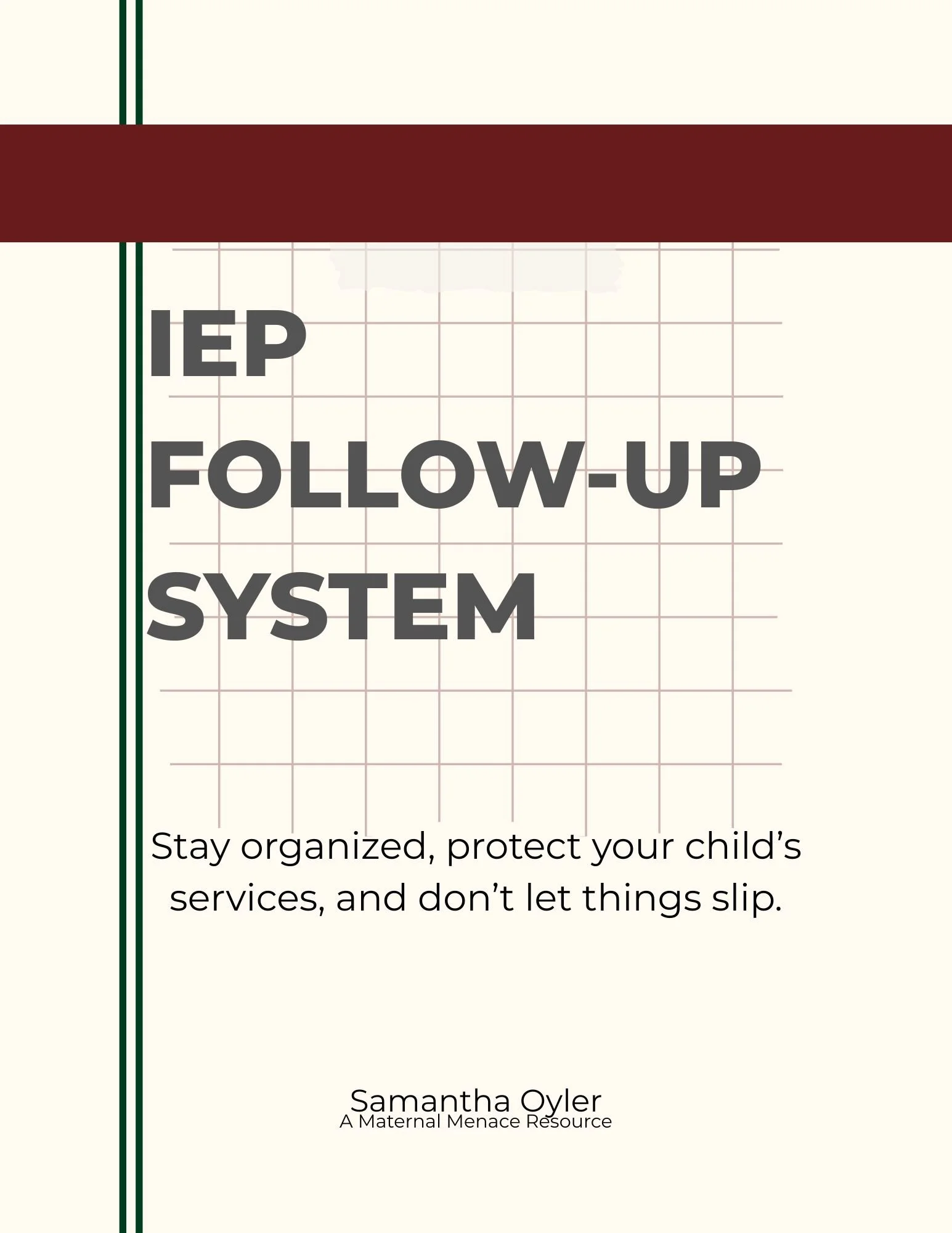
Stay organized after your child's IEP meeting with this free printable toolkit featuring service trackers, communication logs, follow-up templates, escalation planning, and document organization tools.
The IEP meeting may be over, but your child's support doesn't stop there. The IEP Follow-Up System is a free printable toolkit designed to help parents organize documentation, track services, follow up on concerns, and advocate when supports aren't being delivered as agreed.
Whether you're confirming meeting decisions, documenting communication, tracking service implementation, or preparing for future meetings, this toolkit helps you stay organized and proactive throughout the school year.
What you'll learn
Review and organize your child's IEP after the meeting.
Track service start dates and implementation.
Document communication with school staff.
Keep records of concerns and follow-up actions.
Use an escalation plan when issues aren't being resolved.
Stay organized for future IEP meetings and re-evaluations.
Quick Tip: Create a folder—digital or paper—for every email, evaluation, meeting note, and progress report. Organized records make future conversations much easier and ensure you have important information when you need it.
Related resources will be added as our library continues to grow.
Disclaimer: This toolkit is intended for educational and organizational purposes only and does not constitute legal advice. Educational laws and procedures vary by state. If you need legal guidance regarding your child's educational rights, consult a qualified special education advocate or attorney.
IEP Resource Series
① Preschool IEP Guide
Learn the process before your first meeting.
② IEP Survival Kit
Prepare for your meeting with worksheets and advocacy tools.
③ IEP Follow-Up System
Stay organized and monitor services after the meeting.
Found this helpful?
Share it with a friend, family member, or caregiver who might benefit.
New free resources are added regularly to the Maternal Menace Resource Library.
IEP Survival Kit: Free Printable Meeting & Advocacy Toolkit for Parents (2)
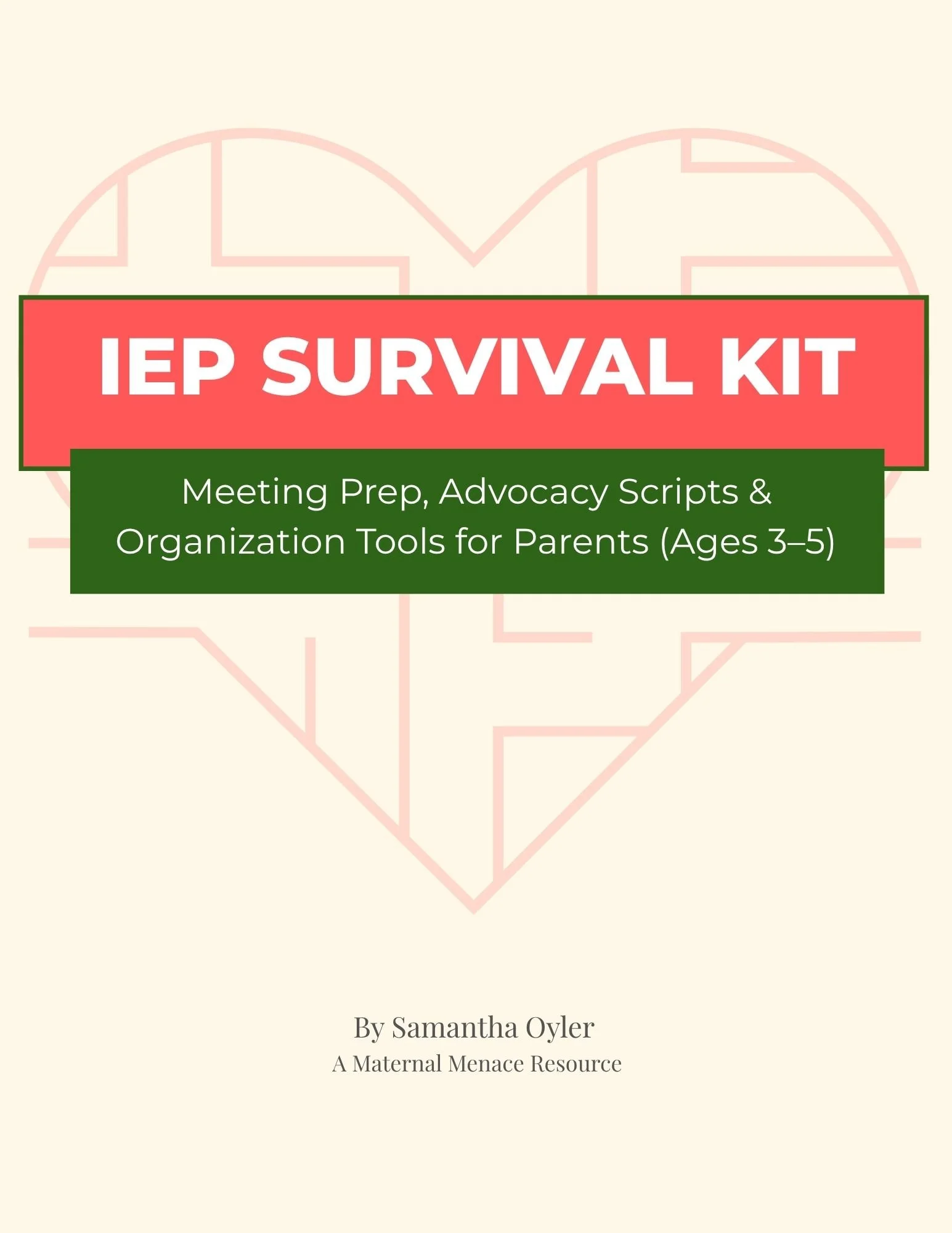
Prepare for your next IEP meeting with this free printable IEP Survival Kit featuring meeting prep sheets, advocacy scripts, service trackers, communication logs, and organization tools.
Walking into an IEP meeting can feel overwhelming, especially if you don't know what to expect. The IEP Survival Kit is a free printable toolkit designed to help parents prepare before the meeting, advocate confidently during discussions, and stay organized afterward.
Inside you'll find practical worksheets, meeting scripts, communication logs, service trackers, note pages, and planning tools to help you keep important information organized while advocating for your child's educational needs.
What you'll learn
Prepare for IEP meetings with confidence.
Organize your priorities before the meeting.
Document concerns and meeting notes.
Track services and follow-up actions.
Recognize common red flags during meetings.
Use advocacy scripts to communicate effectively.
Keep organized communication records with your child's school.
Quick Tip: Bring completed worksheets with you to every IEP meeting. Having your priorities written down makes it much easier to stay focused—even when conversations become overwhelming.
Related resources will be added as our library continues to grow.
Disclaimer: This toolkit is intended for educational and organizational purposes only and does not constitute legal advice. Educational laws and procedures vary by state. If you need legal guidance regarding your child's educational rights, consult a qualified special education advocate or attorney.
IEP Resource Series
① Preschool IEP Guide
Learn the process before your first meeting.
② IEP Survival Kit
Prepare for your meeting with worksheets and advocacy tools.
③ IEP Follow-Up System
Stay organized and monitor services after the meeting.
Found this helpful?
Share it with a friend, family member, or caregiver who might benefit.
New free resources are added regularly to the Maternal Menace Resource Library.
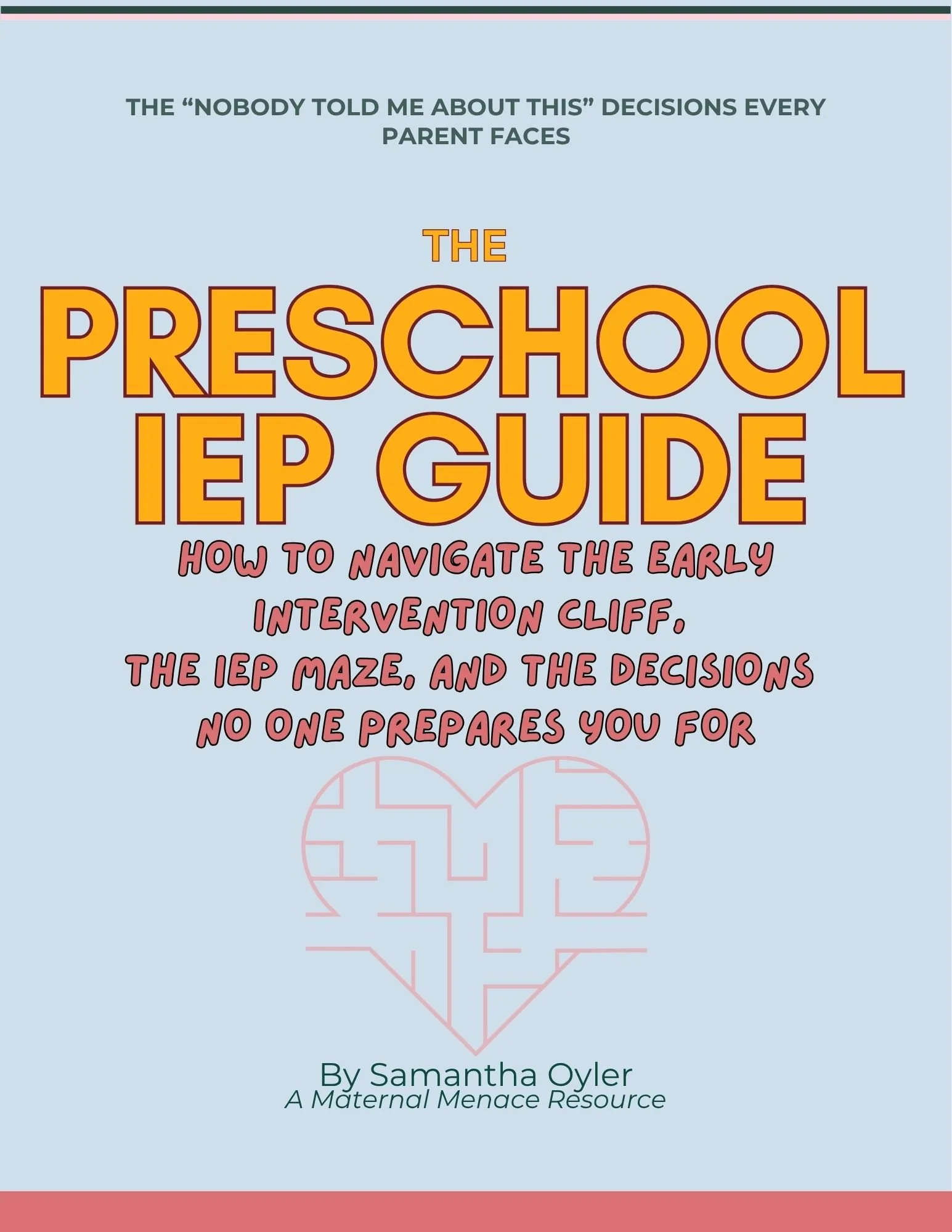
The Preschool IEP Guide: Free Parent Guide to Early Intervention & IEPs (1)
Navigate the transition from Early Intervention to preschool with this free 16-page guide covering IEPs, parent rights, school supports, ABA, homeschooling, and practical meeting tips.
Turning three can be one of the biggest transitions for families of children with disabilities or developmental delays. As Early Intervention services end, many parents are suddenly faced with evaluations, IEP meetings, preschool decisions, and unfamiliar legal terms—often with little guidance.
The Preschool IEP Guide is a free 16-page resource designed to help parents understand the transition from Early Intervention to school-based services, prepare for IEP meetings, understand their rights, and make informed decisions about preschool, homeschooling, and available supports.
What you'll learn
What changes when Early Intervention ends at age three.
How the IEP process works and what it should include.
Your legal rights as a parent during the IEP process.
Questions to ask before enrolling in preschool.
Understanding ABA, behavioral supports, and school policies.
Tips for surviving IEP meetings with confidence.
A quick-reference guide to your rights.
Quick Tip: Request copies of evaluation reports and draft IEP documents before your meeting whenever possible. Reviewing them ahead of time gives you more time to prepare questions and advocate for your child.
Related resources will be added as our library continues to grow.
Disclaimer: This guide is intended for educational and informational purposes only and does not constitute legal advice. Special education laws and procedures may vary by state. If you need legal guidance regarding your child's educational rights, consult a qualified special education advocate or attorney.
IEP Resource Series
① Preschool IEP Guide
Learn the process before your first meeting.
② IEP Survival Kit
Prepare for your meeting with worksheets and advocacy tools.
③ IEP Follow-Up System
Stay organized and monitor services after the meeting.
Found this helpful?
Share it with a friend, family member, or caregiver who might benefit.
New free resources are added regularly to the Maternal Menace Resource Library.
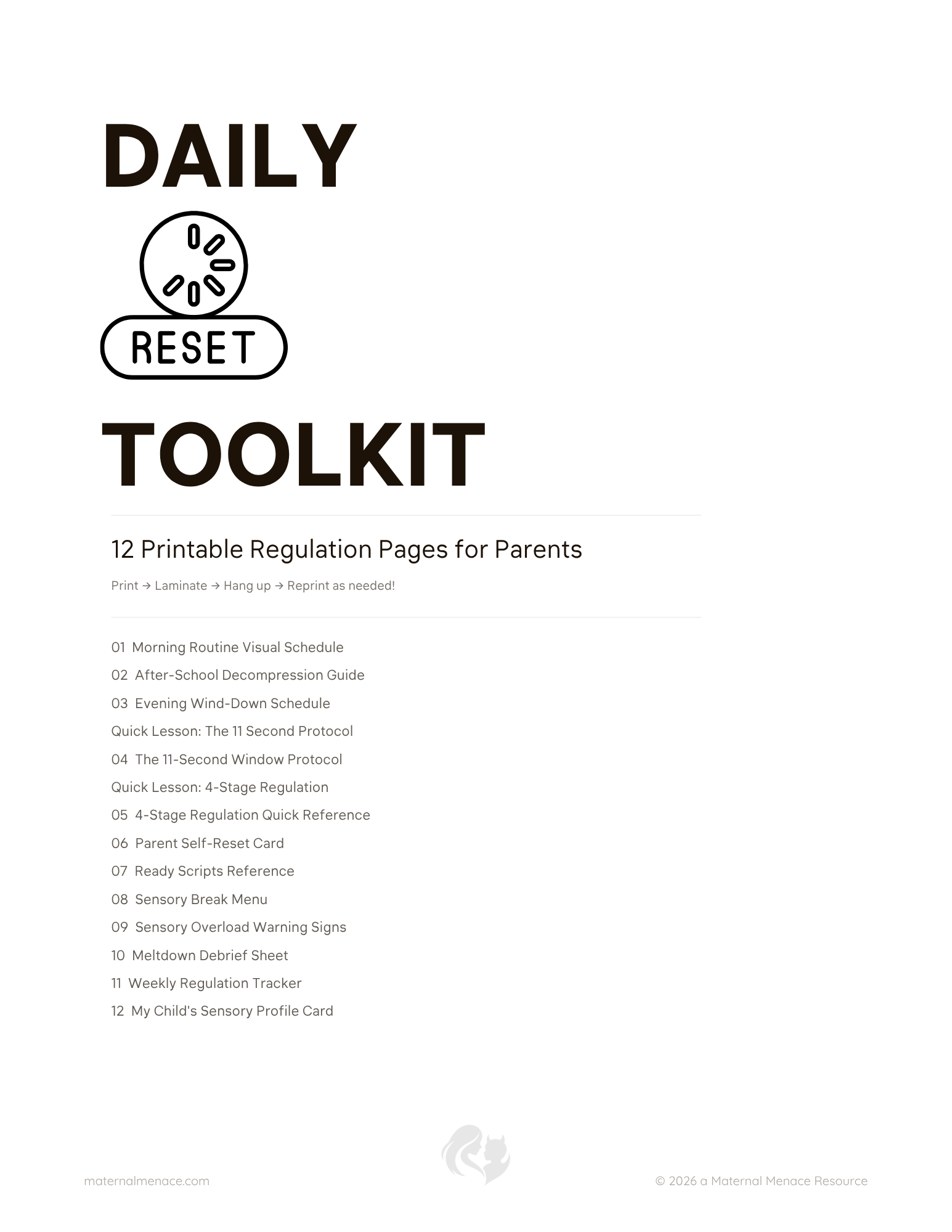
Daily Reset Toolkit: Free Printable Regulation Toolkit for Parents
Help create calmer routines with this free Daily Reset Toolkit featuring 12 printable regulation pages for parents, including visual schedules, sensory supports, trackers, and quick-reference guides.
Support calmer days with this free Daily Reset Toolkit for parents. This printable collection includes 12 practical regulation pages designed to help families build predictable routines, navigate transitions, recognize signs of sensory overload, and support emotional regulation throughout the day.
Whether you're parenting a neurodivergent child or simply looking for structured daily supports, these printable resources are designed to be practical, easy to use, and reusable. Print them, laminate them, hang them up, and use them whenever your family needs a reset.
What you'll learn
Build calming morning and evening routines.
Create smoother after-school transitions.
Recognize early signs of sensory overload.
Support emotional regulation with simple strategies.
Use visual schedules and reference guides throughout the day.
Track regulation patterns to better understand your child's needs.
Quick Tip: Keep frequently used pages somewhere visible—like the refrigerator, a bedroom door, or a family command center. Consistency helps routines become familiar and easier to follow over time.
Disclaimer: This toolkit is intended for educational and informational purposes only and is not a substitute for medical, psychological, or therapeutic advice. Every child has unique needs. Consult your child's healthcare provider or therapist for individualized recommendations.
Found this helpful?
Share it with a friend, family member, or caregiver who might benefit.
New free resources are added regularly to the Maternal Menace Resource Library.
Child Custody Log & Planner: Free Printable Co-Parenting Organizer
Stay organized with this free printable Child Custody Log & Planner for tracking parenting schedules, communication, expenses, appointments, and important records.
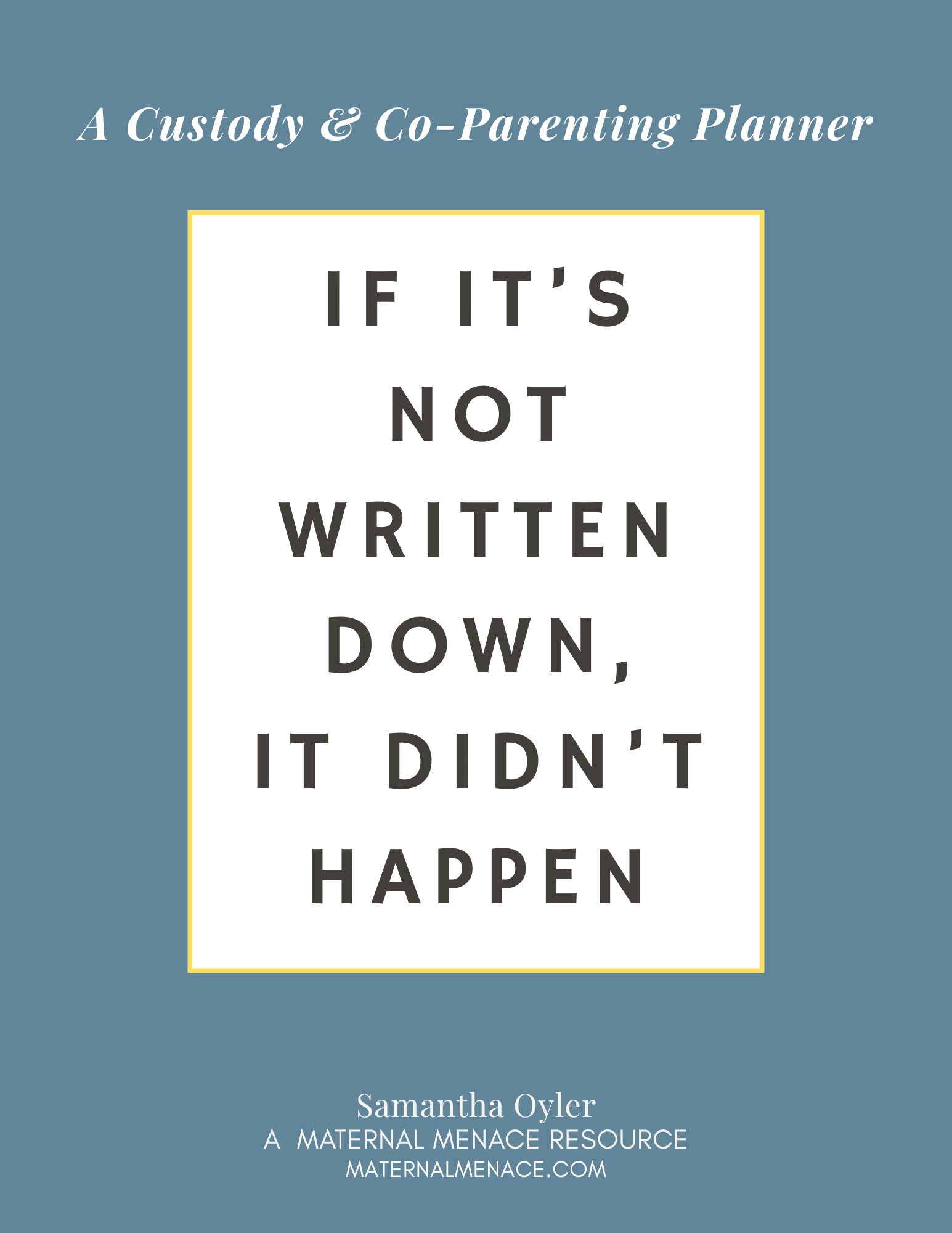
“If It’s Not Written Down It Didn’t Happen”
A Custody & Co-Parenting Planner,
by Samantha Oyler, a Maternal Menace Resource
Keeping accurate records can make co-parenting and custody arrangements easier to manage. This free Child Custody Log & Planner provides printable pages to help you organize important information, document communication, track parenting time, record expenses, and keep everything in one place.
Whether you're navigating a custody agreement, creating better organization, or simply wanting detailed records for your family, this planner is designed to help you stay prepared and organized.
What you'll learn
Keep organized records related to child custody.
Track parenting schedules and exchanges.
Document communication and important events.
Record child-related expenses and appointments.
Maintain detailed information in one convenient planner.
Quick Tip: Keep entries factual, accurate, and timely. Detailed records are often more useful than trying to remember important events weeks or months later.
Related resources will be added as our library continues to grow.
Disclaimer: This planner is intended for educational and organizational purposes only and does not constitute legal advice. Every custody situation is unique. If you have legal questions regarding custody, parenting plans, or court proceedings, consult a qualified attorney licensed in your jurisdiction.
Prefer a professionally printed copy?
This planner is also available as a paperback on Amazon.
Found this helpful?
Share it with a friend, family member, or caregiver who might benefit.
New free resources are added regularly to the Maternal Menace Resource Library.
Narcan Saves Lives: What Every Teen & Parent Should Know About Opioid Overdoses
Learn how to recognize an opioid overdose, understand how Narcan works, and know what to do during an emergency. Quick, practical information that could help save a life.
Opioid overdoses can happen quickly, and knowing how to recognize the signs and use Narcan (naloxone) can save a life. This guide explains what Narcan is, when to use it, how to respond to an overdose, and why calling 911 is always essential. Whether you're a parent, caregiver, educator, or teen, understanding these basics could make a critical difference in an emergency.

What you'll learn
What Narcan (naloxone) is and how it works
Signs of an opioid overdose
How to respond during an overdose emergency
Why calling 911 is still necessary after giving Narcan
Common myths about Narcan
Where Narcan may be available in your community
Quick Tip: If you suspect an opioid overdose, don't wait. Call 911 immediately, give Narcan if it's available, and stay with the person until emergency responders arrive. Acting quickly can save a life.
Disclaimer: This resource is for educational purposes only and is not a substitute for professional medical advice, diagnosis, or emergency care. If you suspect someone is experiencing an overdose, call 911 immediately. Follow local laws and guidance regarding the use of naloxone (Narcan).
Found this helpful?
Share it with a friend, family member, or caregiver who might benefit.
New free resources are added regularly to the Maternal Menace Resource Library.
How to Talk to Your Teen About an Unplanned Pregnancy
A compassionate guide to helping parents navigate difficult conversations with teens about an unplanned pregnancy while offering support, accurate information, and understanding.
Finding out your teen is pregnant can be emotional for everyone involved. While it's natural to have strong feelings, one of the most important things you can do is create a safe space for honest conversation. This guide offers practical tips for talking with your teen, understanding their concerns, exploring available options together, and helping them make informed decisions with the support of trusted adults and healthcare professionals.

What you'll learn
How to respond calmly after your teen shares the news
What to say (and what to avoid saying)
How to encourage honest, judgment-free conversations
The pregnancy options your teen may want to learn about
How to connect with medical providers and support services
Ways to continue supporting your teen, regardless of the decision made
Quick Tip: Your first conversation doesn't have to solve everything. Focus on listening more than talking. Your teen is more likely to come to you again if they feel heard instead of judged.
Related resources will be added as our library continues to grow.
Disclaimer: This resource is for educational purposes only and is not a substitute for medical, legal, or mental health advice. Pregnancy decisions are deeply personal. Encourage your teen to speak with a qualified healthcare provider to receive accurate medical information and discuss all available options.
Found this helpful?
Share it with a friend, family member, or caregiver who might benefit.
New free resources are added regularly to the Maternal Menace Resource Library.
Relationship & Communication Skills Every Child Should Learn
Healthy relationships begin with healthy communication. This infographic shares simple skills that can help children build friendships, solve conflicts, and communicate with confidence.
Communication is one of the most important life skills a child can learn. From making friends to resolving disagreements and expressing emotions, these skills shape relationships for years to come.
This free infographic highlights practical communication and relationship skills parents and caregivers can teach at home. Whether your child is just starting school or growing into their teen years, these habits can help build empathy, confidence, and healthy connections with others.

What you'll learn
How to communicate respectfully
The importance of active listening
Ways to express feelings in healthy ways
How to solve disagreements calmly
Skills that help build lasting friendships
How kindness, empathy, and honesty strengthen relationships
Quick Tip: Children learn communication by watching the adults around them. Modeling respectful conversations, active listening, and healthy conflict resolution often teaches more than words alone.
Related resources will be added as our library continues to grow.
Disclaimer: This resource is intended for educational purposes only and is not a substitute for professional mental health, educational, or behavioral services.
Found this helpful?
Share it with a friend, family member, or caregiver who might benefit.
New free resources are added regularly to the Maternal Menace Resource Library.