
When It’s Okay to Say No: Advocating for Your Child
You don't have to say yes to every therapy or service offered. Learn when it may be reasonable to ask questions, request changes, seek a different provider, or say no.
Saying yes to every therapy or service offered isn't a requirement of being a good parent. Autism supports should have meaningful goals, be individualized, and consider the child and family's needs. This resource explores situations where it may be reasonable to pause, ask questions, request changes, seek another provider, or say no.
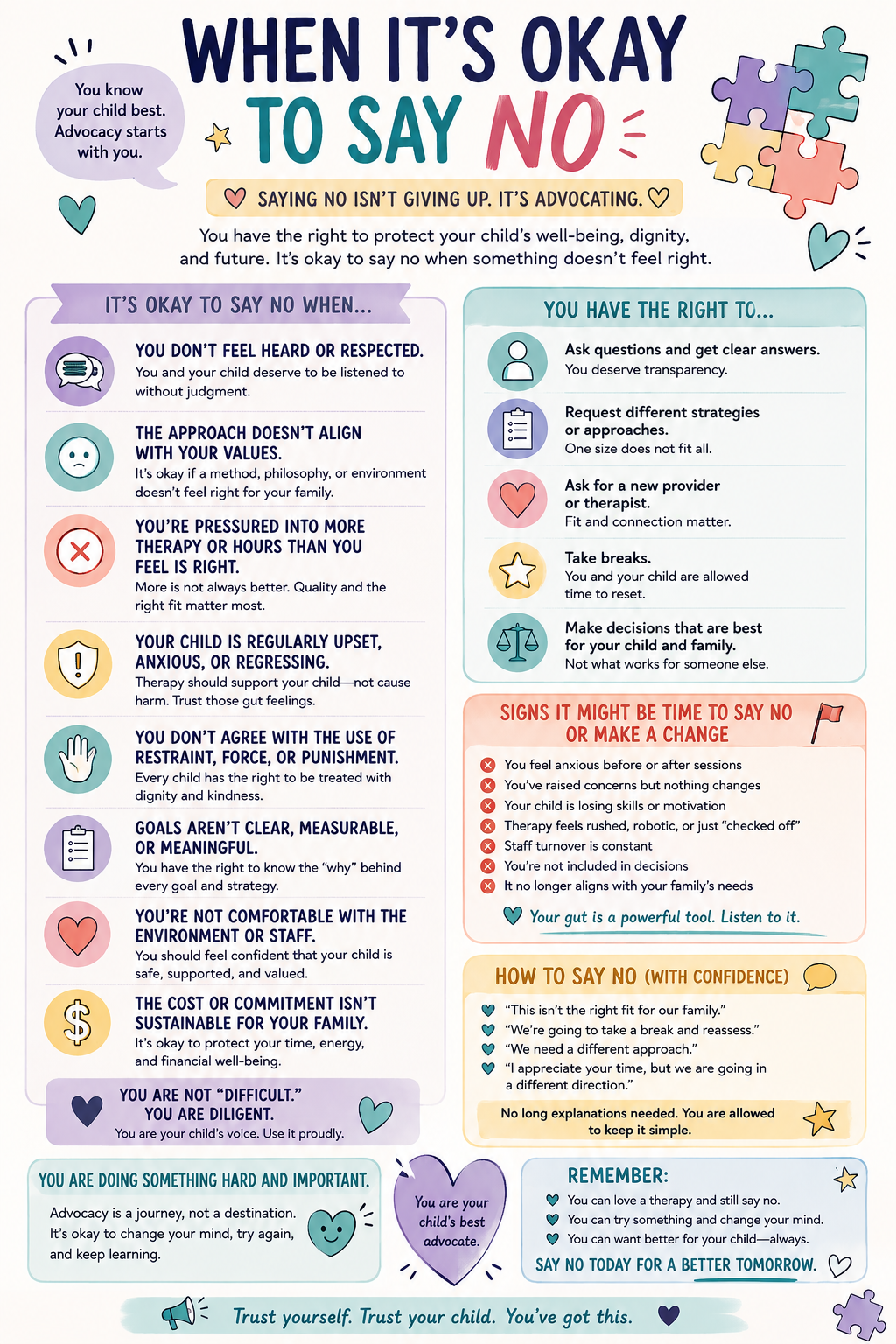
What you'll learn
Why you don't have to automatically accept every service offered
Questions to ask about a therapy's goals and purpose
When a therapy may not be a good fit
Why your child's comfort and well-being matter
When it's reasonable to request changes or a different provider
How to advocate for your child's needs
Why saying no to one service doesn't mean saying no to support altogether
Quick Tip: Ask: “What is the goal, how will we know if it's helping, and what happens if we decide it isn't working?” A good care team should be willing to discuss those questions with you.
Disclaimer: This resource is for general educational purposes only and is not medical, legal, or professional advice. Decisions about therapies and services should consider the individual child's needs, goals, safety, preferences, and circumstances. When appropriate, discuss concerns and alternatives with your child's healthcare or therapy team.
Found this helpful?
Share it with a friend, family member, or caregiver who might benefit.
New free resources are added regularly to the Maternal Menace Resource Library.