
Sleepy Cues vs. Overtiredness
Learn the difference between your baby's early sleep cues and signs of overtiredness so you can recognize when it's time to start winding down.
Learn to recognize the difference between your baby's early sleep cues and signs that they may already be overtired. Catching those early cues can make it easier to begin winding down before your baby becomes harder to settle.
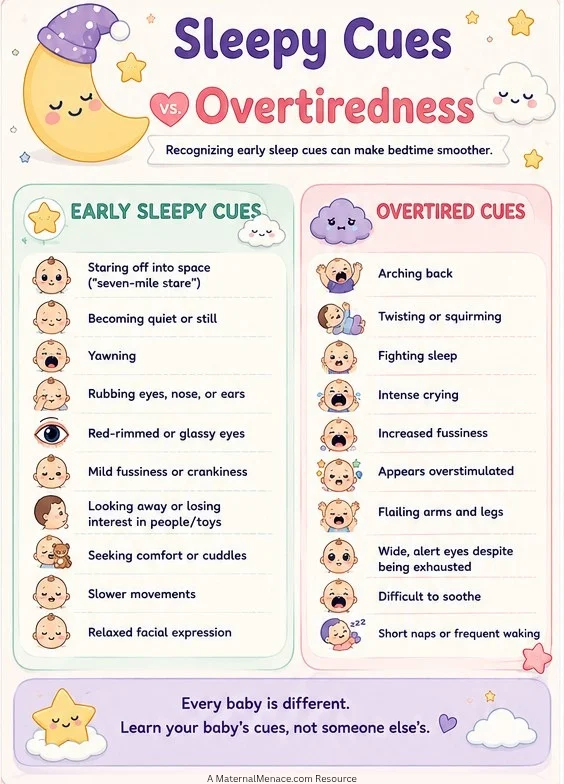
What you'll learn
Common early sleepy cues
Signs your baby may be becoming overtired
Quick Tip: Don't wait for the clock to tell you when your baby should sleep. Watch your baby. Early cues are often easier to work with than waiting until they're already overtired.
Found this helpful?
Share it with a friend, family member, or caregiver who might benefit.
New free resources are added regularly to the Maternal Menace Resource Library.
How to Find Your Baby’s Sleep Window
Your baby's sleep window isn't a magic number on the clock. Learn how to combine sleepy cues, awake time, and your baby's individual patterns to better recognize when they're ready for sleep.
Finding the right time to help your baby settle for sleep isn't always about watching the clock. Learn how to combine your baby's sleepy cues with their age, typical awake periods, and individual patterns to recognize when they may be ready for sleep.
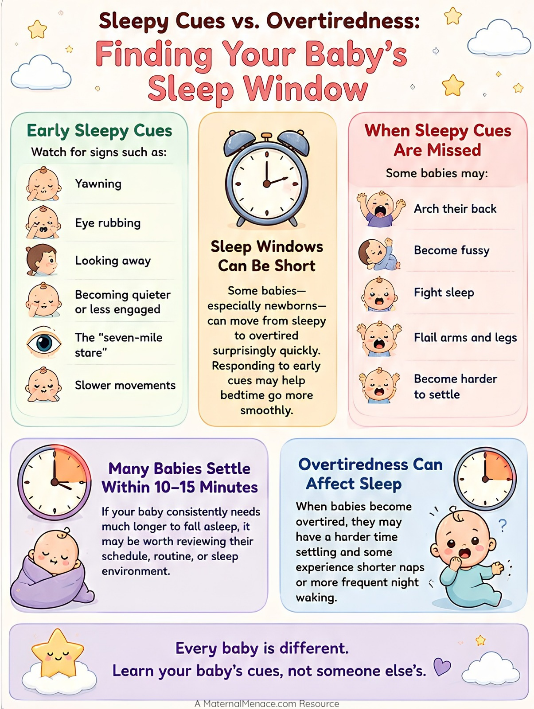
What you'll learn
What a baby's sleep window means
How to recognize early sleepy cues
Why timing can matter when settling your baby
How to notice your baby's individual patterns
Why sleep windows aren't exact deadlines
How to adjust when your baby's needs change
Quick Tip: Start watching for your baby's sleepy cues before they become overtired. Keep track of when your baby wakes, when sleepy cues appear, and when they actually fall asleep for a few days. Patterns can be more useful than trying to force an exact number of minutes.
Disclaimer: This resource is for general educational purposes only and is not medical advice, diagnosis, or treatment. Sleep needs and patterns vary by baby, especially during the newborn period. Sleep windows are not exact rules or guarantees of when a baby will sleep. Follow current safe-sleep recommendations and consult your baby's pediatrician with questions or concerns about feeding, growth, breathing, or sleep.
Found this helpful?
Share it with a friend, family member, or caregiver who might benefit.
New free resources are added regularly to the Maternal Menace Resource Library.