
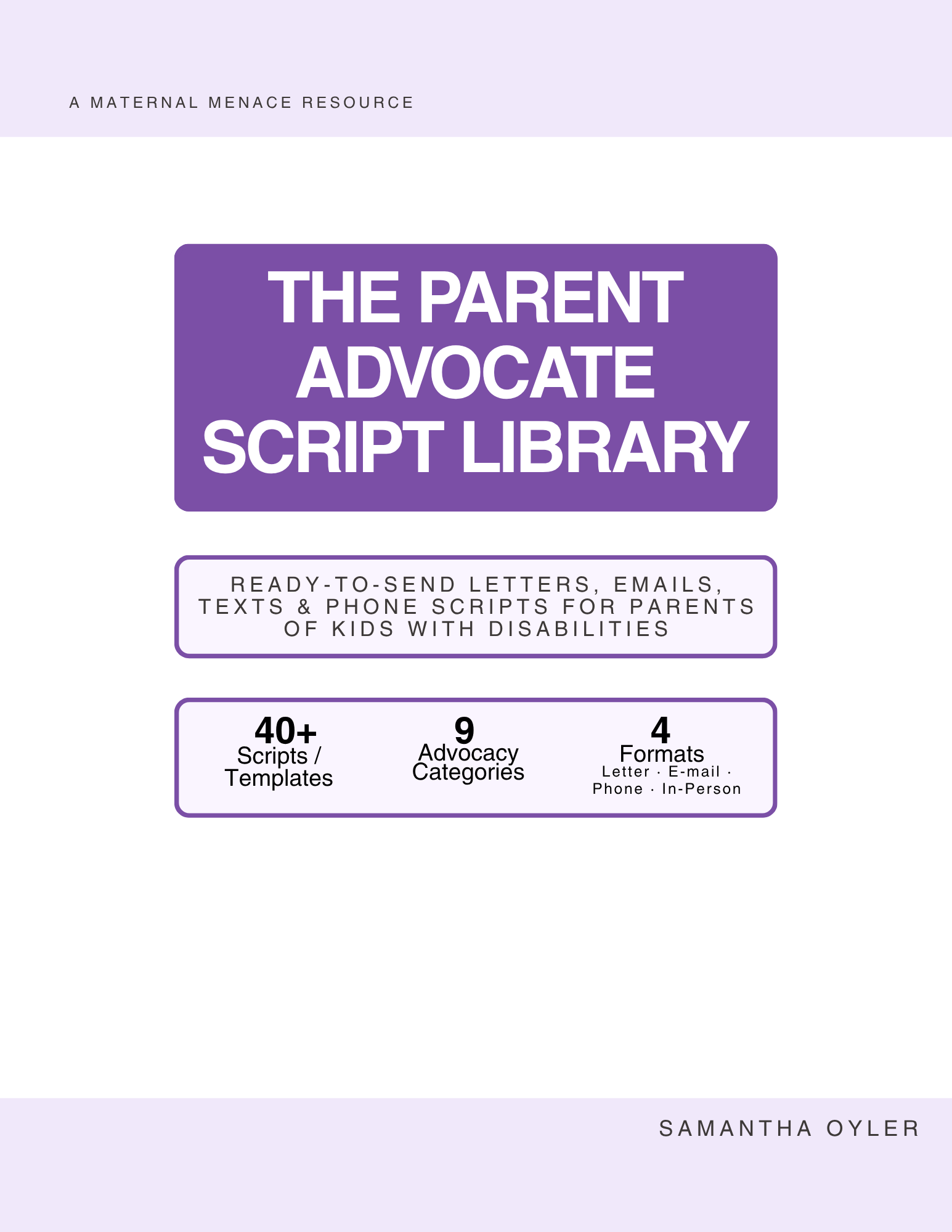
Parent Advocate Script Library: 40+ Ready-to-Use Advocacy Scripts
Download this free Parent Advocate Script Library featuring 40+ customizable letters, emails, phone scripts, text messages, and conversation templates to help parents confidently advocate for their children.
Advocating for your child can be intimidating, especially when you're navigating schools, therapy providers, insurance companies, or government agencies. The Parent Advocate Script Library provides over 40 ready-to-use scripts to help you communicate clearly and confidently.
Inside you'll find customizable letters, emails, text messages, phone scripts, and in-person conversation starters covering a variety of common advocacy situations. Simply personalize the templates to fit your family's needs and use them as a starting point for productive conversations.
What you'll learn
Communicate confidently with schools and service providers.
Adapt scripts for emails, phone calls, text messages, and letters.
Request evaluations, services, accommodations, and meetings.
Document concerns professionally and clearly.
Advocate for your child's needs while maintaining organized communication.
Quick Tip: Save your most-used scripts in your phone, email drafts, or notes app. Having them readily available can reduce stress and make it easier to respond quickly when situations arise.
Related resources will be added as our library continues to grow.
Disclaimer: These templates are intended for educational and informational purposes only and do not constitute legal advice. Every situation is unique. Consider consulting a qualified attorney, advocate, or educational professional for guidance specific to your circumstances.
Found this helpful?
Share it with a friend, family member, or caregiver who might benefit.
New free resources are added regularly to the Maternal Menace Resource Library.
Teen Slang Decoded: A Parent's Guide to Today's Teen Language
Confused by today's teen slang? This parent-friendly guide explains common words, phrases, and abbreviations so you can better understand your teen's world.
Ever feel like your teen is speaking a completely different language? You're not alone. Slang changes quickly, and it can be hard for parents to keep up. This guide explains common teen slang in simple terms to help you better understand conversations, texts, and social media while keeping communication open at home.

What you'll learn
Common teen slang words and phrases
What popular abbreviations actually mean
Which slang is harmless and which may deserve a closer look
How to talk with your teen without sounding judgmental
Why language changes with every generation
Quick Tip: Instead of correcting or teasing your teen for using slang, ask them what a word means. Most teens enjoy explaining it, and it creates an opportunity for conversation instead of conflict.Related resources will be added as our library continues to grow.
Disclaimer: Teen slang changes rapidly, and meanings can vary depending on region, age group, and online communities. This resource is intended as a general educational guide and may not include every current term or usage.
Found this helpful?
Share it with a friend, family member, or caregiver who might benefit.
New free resources are added regularly to the Maternal Menace Resource Library.
How to Talk to Your Teen About an Unplanned Pregnancy
A compassionate guide to helping parents navigate difficult conversations with teens about an unplanned pregnancy while offering support, accurate information, and understanding.
Finding out your teen is pregnant can be emotional for everyone involved. While it's natural to have strong feelings, one of the most important things you can do is create a safe space for honest conversation. This guide offers practical tips for talking with your teen, understanding their concerns, exploring available options together, and helping them make informed decisions with the support of trusted adults and healthcare professionals.

What you'll learn
How to respond calmly after your teen shares the news
What to say (and what to avoid saying)
How to encourage honest, judgment-free conversations
The pregnancy options your teen may want to learn about
How to connect with medical providers and support services
Ways to continue supporting your teen, regardless of the decision made
Quick Tip: Your first conversation doesn't have to solve everything. Focus on listening more than talking. Your teen is more likely to come to you again if they feel heard instead of judged.
Related resources will be added as our library continues to grow.
Disclaimer: This resource is for educational purposes only and is not a substitute for medical, legal, or mental health advice. Pregnancy decisions are deeply personal. Encourage your teen to speak with a qualified healthcare provider to receive accurate medical information and discuss all available options.
Found this helpful?
Share it with a friend, family member, or caregiver who might benefit.
New free resources are added regularly to the Maternal Menace Resource Library.
Relationship & Communication Skills Every Child Should Learn
Healthy relationships begin with healthy communication. This infographic shares simple skills that can help children build friendships, solve conflicts, and communicate with confidence.
Communication is one of the most important life skills a child can learn. From making friends to resolving disagreements and expressing emotions, these skills shape relationships for years to come.
This free infographic highlights practical communication and relationship skills parents and caregivers can teach at home. Whether your child is just starting school or growing into their teen years, these habits can help build empathy, confidence, and healthy connections with others.

What you'll learn
How to communicate respectfully
The importance of active listening
Ways to express feelings in healthy ways
How to solve disagreements calmly
Skills that help build lasting friendships
How kindness, empathy, and honesty strengthen relationships
Quick Tip: Children learn communication by watching the adults around them. Modeling respectful conversations, active listening, and healthy conflict resolution often teaches more than words alone.
Related resources will be added as our library continues to grow.
Disclaimer: This resource is intended for educational purposes only and is not a substitute for professional mental health, educational, or behavioral services.
Found this helpful?
Share it with a friend, family member, or caregiver who might benefit.
New free resources are added regularly to the Maternal Menace Resource Library.
Is My Toddler Possessed? (Probably not.)
If your toddler has screamed because you peeled the banana "wrong," you're not alone. This lighthearted infographic reminds parents that toddler behavior can be wild—and completely normal.
Toddlers are tiny humans with big emotions, growing independence, and very little impulse control. One minute they're giving hugs, and the next they're melting down because you handed them the cup they asked for.
This humorous infographic takes a playful look at everyday toddler behaviors that make parents wonder, "Is my toddler possessed?" while reminding families that these moments are often a normal part of development.
Sometimes, laughter really is the best parenting tool.

What you'll learn
Why toddlers have big emotions
Common (and hilarious) toddler behaviors
When dramatic behavior is developmentally normal
How humor can help parents through challenging days
A reminder that you're not parenting alone
Quick Tip: Toddlers aren't trying to give you a hard time—they're having a hard time. Staying calm won't stop every meltdown, but it can help your child learn how to regulate their emotions over time.
Related resources will be added as our library continues to grow.
Disclaimer: This resource is intended for educational and entertainment purposes. While many toddler behaviors are a normal part of child development, parents and caregivers should consult a healthcare provider if they have concerns about their child's development, health, or behavior.
Found this helpful?
Share it with a friend, family member, or caregiver who might benefit.
New free resources are added regularly to the Maternal Menace Resource Library.
Let Me Know
Fill in the blank: My toddler cried because…🤦🏻♀️
Fall & Winter Safety Tips for Children with Neurodivergence
Cooler weather brings new routines and unique safety considerations. This free infographic shares practical fall and winter safety tips for neurodivergent children and their families.
As temperatures drop and routines change, neurodivergent children may experience new sensory challenges, seasonal illnesses, holiday disruptions, and outdoor safety concerns. A little preparation can help make the colder months safer and less stressful.
This free infographic provides practical fall and winter safety tips for autistic, ADHD, and other neurodivergent children, helping families navigate seasonal changes with confidence.

What you'll learn
Dressing for changing weather
Cold weather and frostbite prevention
Safe outdoor play
Holiday and sensory overload planning
Illness prevention and healthy habits
School routine transitions
Fire and heating safety
Emergency preparedness during winter weather
Quick Tip: Keep a small "go bag" ready with weather-appropriate clothing, comfort items, snacks, medications (if needed), and sensory supports so you're prepared for changing plans or unexpected outings.
Click Here For Summer Safety Tips
Disclaimer: This resource is intended for educational purposes only and should not replace medical, therapeutic, or emergency safety advice. Every child has unique needs, and families should make decisions based on their child's individual circumstances.
Found this helpful?
Share it with a friend, family member, or caregiver who might benefit.
New free resources are added regularly to the Maternal Menace Resource Library.
Summer Safety Tips for Children with Neurodivergence
Summer brings new adventures—and new safety challenges. This free infographic shares practical tips to help keep neurodivergent children safe, comfortable, and prepared during the warmer months.
Summer routines often look different from the rest of the year, which can be exciting but also challenging for neurodivergent children. Changes in schedules, increased outdoor activities, heat, crowds, and sensory input may require extra planning.
This free infographic provides practical summer safety tips to help families support autistic, ADHD, and other neurodivergent children while enjoying the season safely and confidently.

What you'll learn
Heat and sun safety
Water safety reminders
Wandering and elopement prevention
Managing sensory overload
Staying hydrated
Planning for outings and vacations
Playground and outdoor safety
Emergency identification and communication tools
Quick Tip: Prepare for outings by bringing familiar comfort items, water, snacks, sunscreen, headphones or other sensory supports, and reviewing the day's plan together when appropriate.
Related resources will be added as our library continues to grow.
Disclaimer: This resource is for educational purposes only and is not a substitute for professional medical, therapeutic, or safety advice. Every child has unique needs, and families should make decisions based on their child's individual abilities and circumstances.
Found this helpful?
Share it with a friend, family member, or caregiver who might benefit.
New free resources are added regularly to the Maternal Menace Resource Library.
Life Lessons & Skills Every Child Should Learn
Help prepare your child for life with practical lessons that build confidence, responsibility, resilience, and independence. Small everyday moments can teach lifelong skills.
Some of life's most important lessons aren't taught in a classroom. From showing kindness and solving problems to managing money and taking responsibility, everyday experiences help children develop the skills they'll use for the rest of their lives.
This free infographic highlights valuable life lessons and practical skills parents and caregivers can teach through daily routines, conversations, and real-world experiences.

What you'll learn
Responsibility and accountability
Kindness, empathy, and respect
Problem-solving and critical thinking
Communication skills
Time management and organization
Financial basics
Household responsibilities
Healthy habits and self-care
Resilience and perseverance
The importance of honesty and integrity
Quick Tip: Children learn best by watching the adults around them. Model the behaviors and values you hope they'll carry into adulthood, and involve them in everyday tasks whenever possible.
Related resources will be added as our library continues to grow.
Disclaimer: This resource is intended for educational purposes and offers general parenting guidance. Every child develops at their own pace, and families may choose different approaches based on their values and circumstances.
Found this helpful?
Share it with a friend, family member, or caregiver who might benefit.
New free resources are added regularly to the Maternal Menace Resource Library.
Natural First Aid: Simple Remedies for Everyday Minor Injuries & Illnesses
Learn simple, natural first aid tips for minor everyday injuries and illnesses. This free infographic shares practical remedies while emphasizing when professional medical care is needed.
Every family experiences minor bumps, scrapes, insect bites, and everyday illnesses. While natural remedies may help provide comfort for some minor concerns, it's important to know their limits and recognize when professional medical care is necessary.
This free infographic shares common natural first aid ideas, basic safety tips, and reminders about when to seek medical attention. Natural remedies should complement—not replace—appropriate medical care.

What you'll learn
Natural remedies for minor cuts and scrapes
Soothing minor burns and insect bites
Simple ways to ease minor cold symptoms
Basic first aid safety tips
When home care is appropriate
When to seek emergency or professional medical care
Quick Tip: Natural remedies may provide comfort for minor issues, but they should never delay emergency care. If symptoms are severe, worsening, or you suspect a medical emergency, seek immediate medical attention.
Related resources will be added as our library continues to grow.
Disclaimer: This resource is for educational purposes only and is not intended to diagnose, treat, cure, or prevent any disease. Always consult a qualified healthcare professional for medical concerns. Call emergency services immediately for life-threatening emergencies.
Found this helpful?
Share it with a friend, family member, or caregiver who might benefit.
New free resources are added regularly to the Maternal Menace Resource Library.
Financial Literacy for Kids: Teaching Smart Money Habits Early
Help children build healthy money habits with simple lessons about saving, spending, earning, and giving. Financial literacy starts with everyday conversations.
Financial literacy is an important life skill that can begin long before a child gets their first paycheck. Teaching children how money works helps them develop responsibility, confidence, and healthy financial habits that can last a lifetime.
This free infographic introduces age-appropriate ways to teach kids about earning, saving, spending, budgeting, and giving through everyday experiences and family conversations.

What you'll learn
Why saving is important
The difference between needs and wants
How to earn money responsibly
Budgeting basics for kids
Smart spending habits
The value of giving and generosity
Why mistakes are part of learning
Quick Tip: The best way to teach financial literacy is by involving kids in everyday money decisions. Simple experiences—like comparing prices at the grocery store or setting a savings goal—can build lifelong money skills.
Related resources will be added as our library continues to grow.
Disclaimer: This resource is for educational purposes only and is not financial or legal advice. Families should make financial decisions based on their own circumstances.
Found this helpful?
Share it with a friend, family member, or caregiver who might benefit.
New free resources are added regularly to the Maternal Menace Resource Library.