
Autism Therapies & Tips
Autism therapy isn't one-size-fits-all. Learn about common therapies, practical caregiver strategies, and why individualized goals and the right fit matter.
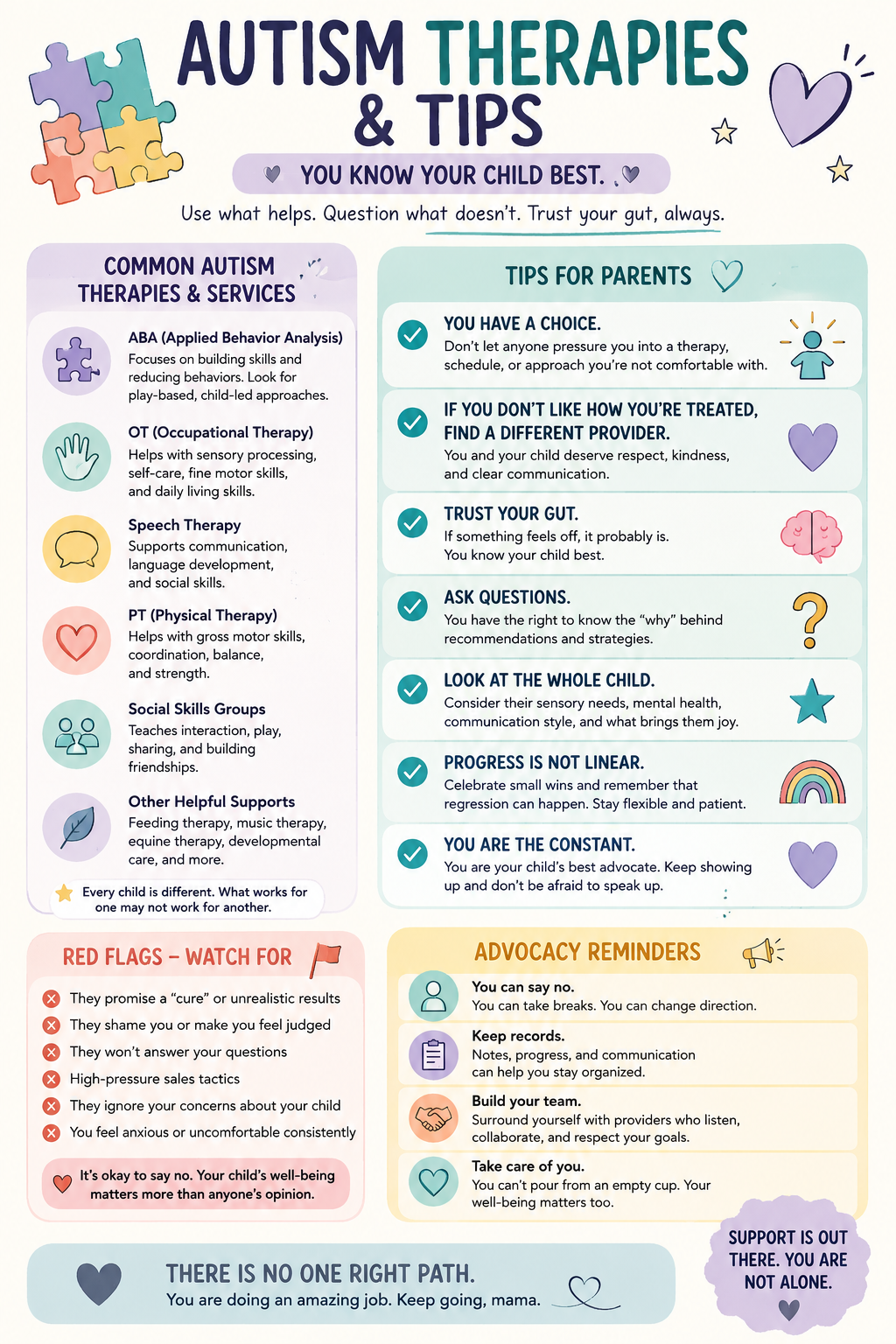
Exploring autism therapies can feel overwhelming, especially when every child has different strengths, needs, communication styles, and goals. This infographic introduces common therapy options and practical tips for helping families understand and support their autistic child.
What you'll learn
Common therapies and supports used with autistic children
What speech therapy can support
What occupational therapy can support
How behavioral and developmental approaches may be used
Why therapy goals should be individualized
Practical ways caregivers can support skills at home
Why finding the right fit matters more than simply doing more therapy
Quick Tip: More therapy isn't automatically better. Look at what the therapy is helping your child do, how your child responds to it, and whether the goals actually matter to your child's daily life.
Disclaimer: This resource is for general educational purposes only and is not medical advice, diagnosis, or treatment. Autism therapies and supports should be individualized to the child's needs, goals, preferences, and circumstances. Talk with your child's healthcare providers and qualified therapists when deciding which services or interventions may be appropriate.
Found this helpful?
Share it with a friend, family member, or caregiver who might benefit.
New free resources are added regularly to the Maternal Menace Resource Library.