
Sensory Play for Toddlers: 10 Easy Activities for Learning Through Play
Help your toddler learn through play with these 10 simple sensory activities. Explore fun, low-cost ideas that build fine motor skills, creativity, self-regulation, and early learning using everyday materials.
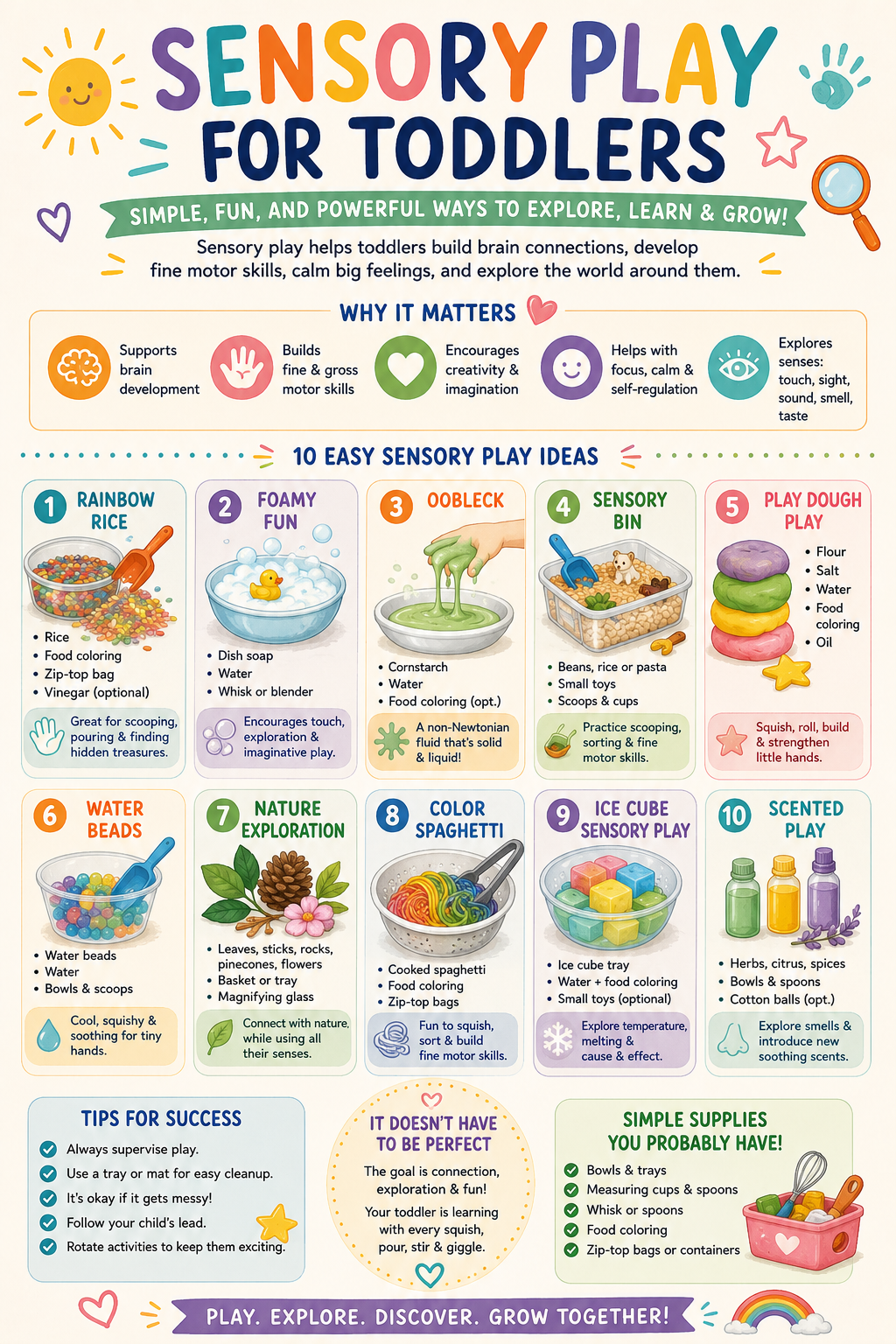
Sensory play is one of the best ways toddlers learn about the world around them. This infographic features 10 simple sensory activities using inexpensive, everyday materials to support brain development, motor skills, creativity, and self-regulation through hands-on exploration.
What you'll learn
Easy sensory activities you can set up in minutes
How sensory play supports toddler development
Budget-friendly sensory bin and play ideas
Ways to encourage creativity, problem-solving, and fine motor skills
Simple supplies you probably already have at home
Quick Tip: Use a tray, towel, or plastic tablecloth for easier cleanup.
Related resources will be added as our library continues to grow.
Disclaimer: This resource is for educational purposes only and is not a substitute for medical, developmental, or therapeutic advice. Always supervise children during sensory activities and choose materials appropriate for their age, developmental level, allergies, and individual sensory needs.
Found this helpful?
Share it with a friend, family member, or caregiver who might benefit.
New free resources are added regularly to the Maternal Menace Resource Library.
Sensory Play by the Senses: Easy Activities for Every Type of Learner
Explore sensory play through touch, sight, sound, smell, taste, and movement with this easy family guide. Packed with simple activities that build developmental skills, encourage curiosity, and support self-regulation.
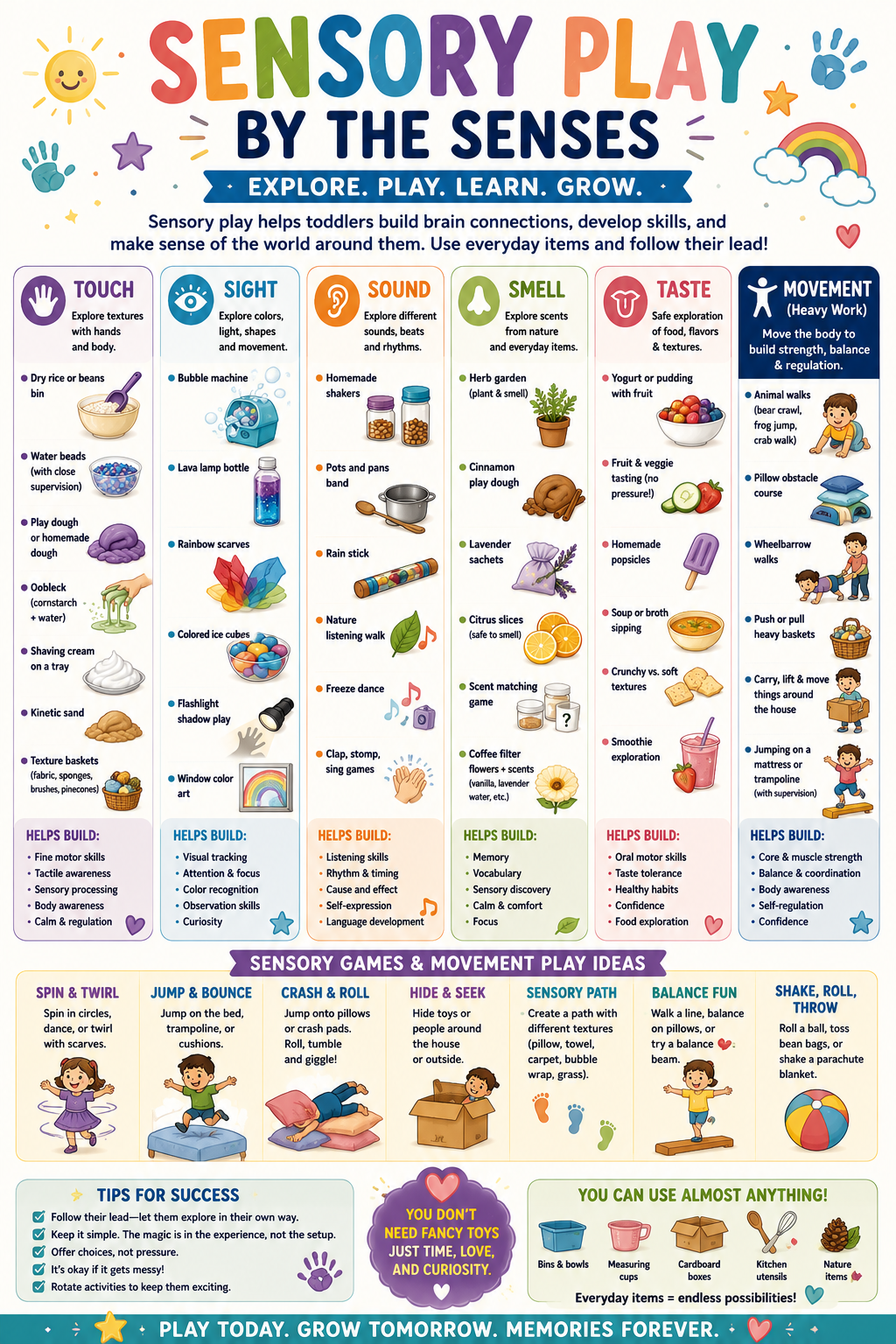
Sensory play supports children's learning by engaging sight, sound, touch, smell, taste, and movement. This colorful guide includes simple, low-cost activities that encourage exploration, strengthen developmental skills, and make learning fun using everyday household items.
What you'll learn
Sensory activities organized by each of the seven senses
Simple household items you can use for sensory play
How sensory experiences support brain development
Movement ideas that encourage self-regulation and body awareness
Tips for creating meaningful, child-led play experiences
Quick Tip: Respect your child's sensory preferences—never force participation.
Related resources will be added as our library continues to grow.
Disclaimer: This resource is for educational purposes only and is not a substitute for medical, developmental, or therapeutic advice. Always supervise children during sensory activities and choose materials appropriate for their age, developmental level, allergies, and individual sensory needs.
Found this helpful?
Share it with a friend, family member, or caregiver who might benefit.
New free resources are added regularly to the Maternal Menace Resource Library.