
How to Find Your Baby’s Sleep Window
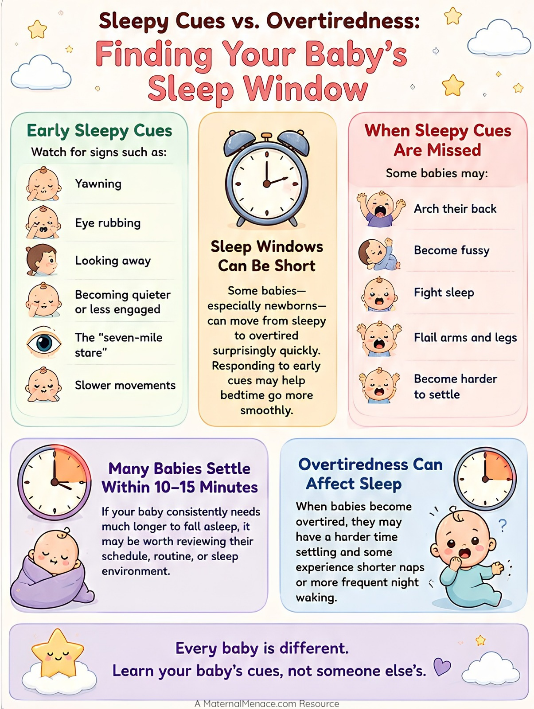
Your baby's sleep window isn't a magic number on the clock. Learn how to combine sleepy cues, awake time, and your baby's individual patterns to better recognize when they're ready for sleep.
Finding the right time to help your baby settle for sleep isn't always about watching the clock. Learn how to combine your baby's sleepy cues with their age, typical awake periods, and individual patterns to recognize when they may be ready for sleep.
What you'll learn
What a baby's sleep window means
How to recognize early sleepy cues
Why timing can matter when settling your baby
How to notice your baby's individual patterns
Why sleep windows aren't exact deadlines
How to adjust when your baby's needs change
Quick Tip: Start watching for your baby's sleepy cues before they become overtired. Keep track of when your baby wakes, when sleepy cues appear, and when they actually fall asleep for a few days. Patterns can be more useful than trying to force an exact number of minutes.
Disclaimer: This resource is for general educational purposes only and is not medical advice, diagnosis, or treatment. Sleep needs and patterns vary by baby, especially during the newborn period. Sleep windows are not exact rules or guarantees of when a baby will sleep. Follow current safe-sleep recommendations and consult your baby's pediatrician with questions or concerns about feeding, growth, breathing, or sleep.
Found this helpful?
Share it with a friend, family member, or caregiver who might benefit.
New free resources are added regularly to the Maternal Menace Resource Library.
Newborn Bedtime Challenges: Common Problems & Practical Solutions
Newborn sleep is unpredictable by design. Learn about common challenges like frequent waking, day-night confusion, difficulty settling, and short sleep periods while keeping realistic expectations and safe sleep at the center.
Newborns do not follow predictable sleep schedules yet, which can make bedtime feel especially difficult. This infographic covers common newborn sleep challenges, including day-night confusion, frequent waking, difficulty settling, and short sleep periods, while focusing on realistic expectations and safe sleep practices.

What you'll learn
Why newborns wake frequently
What day-night confusion can look like
Why newborns may have difficulty settling
How feeding needs affect sleep
Ways to create a calming nighttime routine
How to support healthy sleep habits without expecting a newborn to follow a strict schedule
Important safe-sleep basics for newborns
Quick Tip: Keep nighttime interactions calm, quiet, and dim whenever possible. During the day, normal household light and activity can help your newborn begin learning the difference between daytime and nighttime.
Related resources will be added as our library continues to grow.
Disclaimer: This resource is for general educational purposes only and is not medical advice, diagnosis, or treatment. Newborns have unique feeding and sleep needs, and safe-sleep recommendations should always be followed. Never place a newborn to sleep on a couch, chair, adult bed, or other unsafe sleep surface. If your newborn has difficulty breathing, is difficult to wake, is feeding poorly, has concerning changes in behavior, or you have other health concerns, contact their pediatrician or seek appropriate medical care.
Found this helpful?
Share it with a friend, family member, or caregiver who might benefit.
New free resources are added regularly to the Maternal Menace Resource Library.
Infant Bedtime Challenges: Common Problems & Practical Solutions
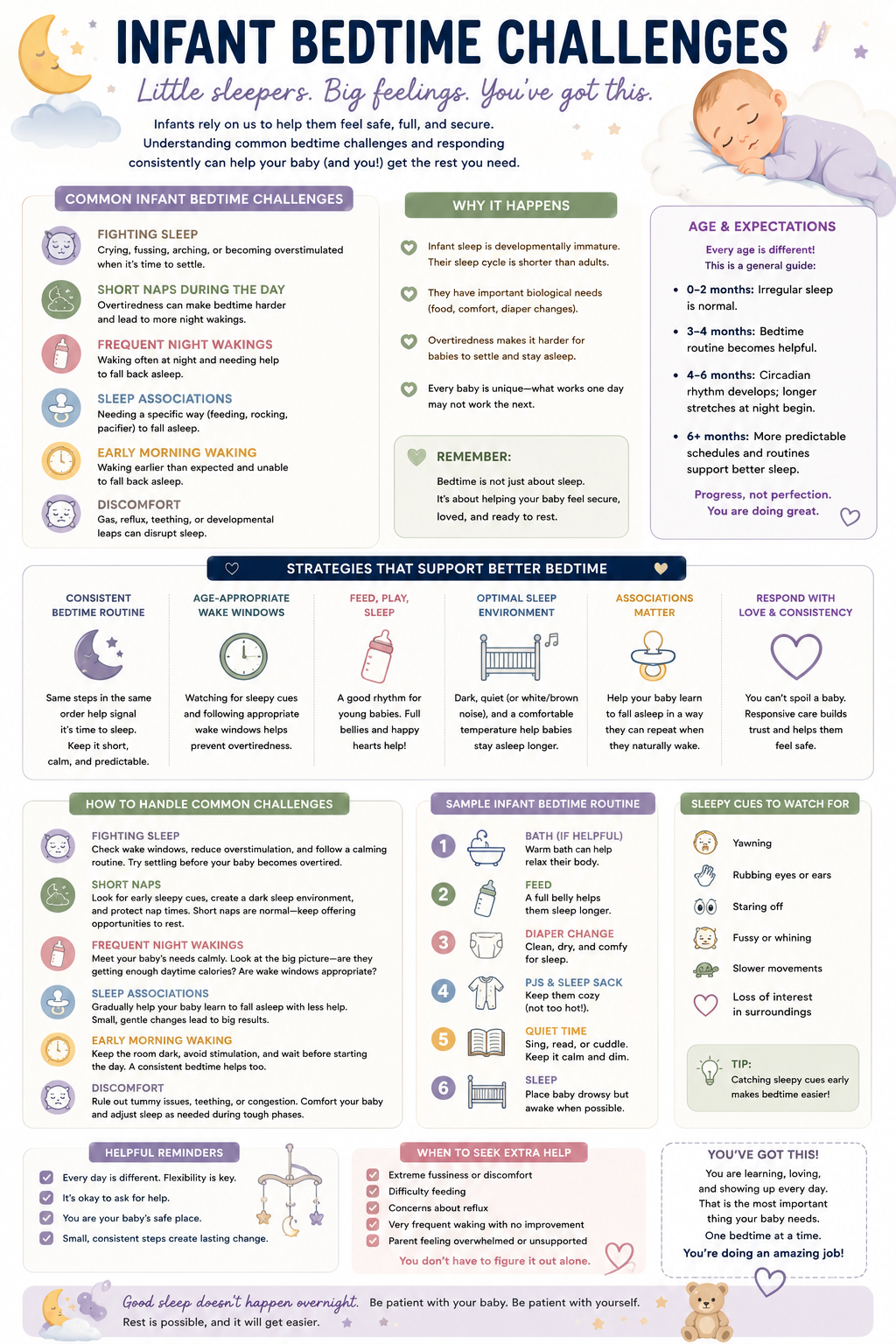
Infant sleep changes constantly during the first year. Learn about common bedtime challenges, overtiredness, frequent waking, and practical ways to create a predictable and supportive sleep routine.
Infant sleep can be unpredictable, especially during the first year. This infographic covers common bedtime challenges such as difficulty settling, frequent waking, overtiredness, and changes in sleep patterns, along with practical strategies caregivers can use to create a consistent and supportive sleep routine.
What you'll learn
Common reasons infants struggle at bedtime
How overtiredness can affect settling
Why infant sleep patterns change
How consistent routines can help
Ways to create a calming sleep environment
When sleep concerns may warrant a conversation with a pediatrician
Quick Tip: Watch for your baby’s early sleepy cues rather than waiting until they are extremely tired. Yawning, staring off, reduced activity, or becoming less engaged can be signs that it is time to begin winding down.
Found this helpful?
Share it with a friend, family member, or caregiver who might benefit.
New free resources are added regularly to the Maternal Menace Resource Library.