
The Preschool IEP Guide: Free Parent Guide to Early Intervention & IEPs (1)
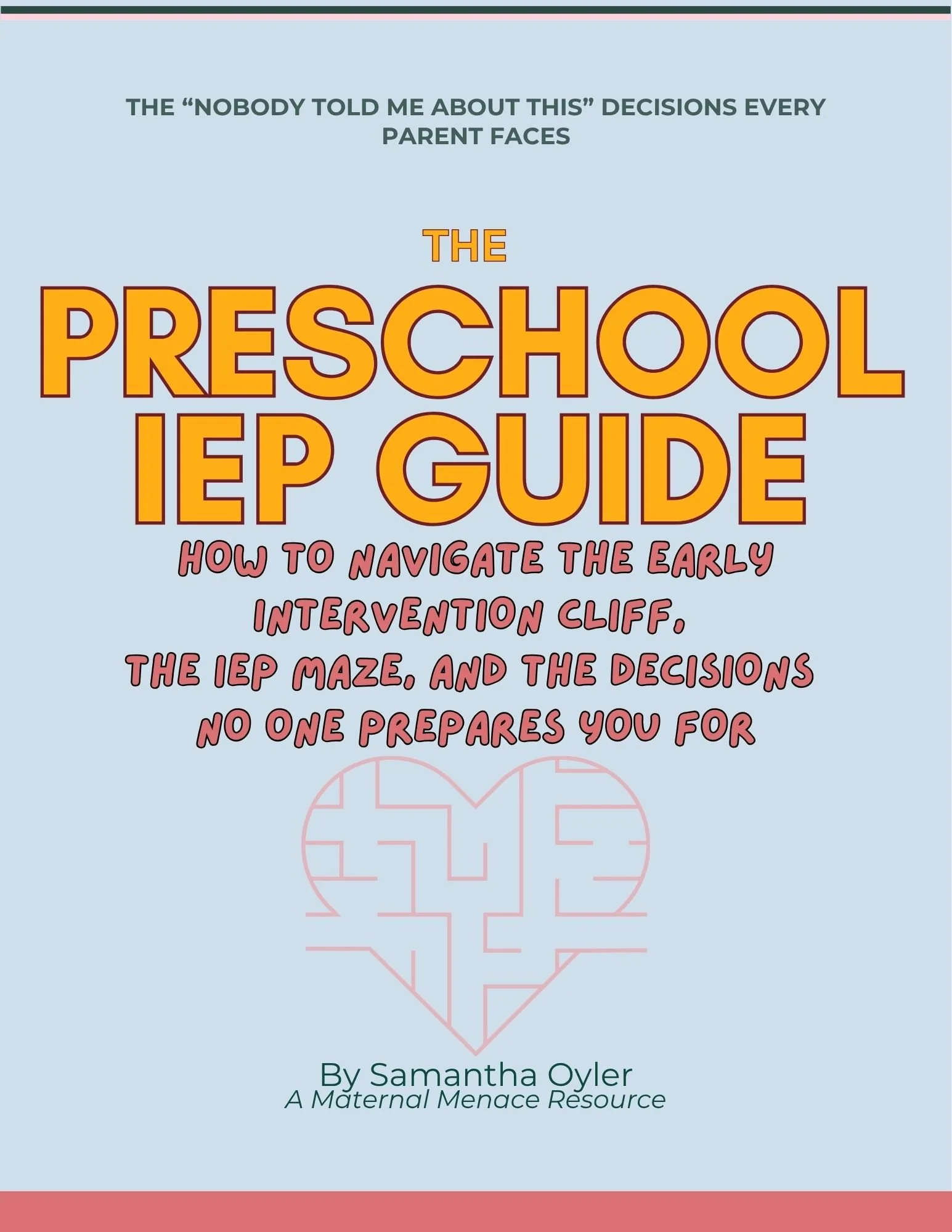
Navigate the transition from Early Intervention to preschool with this free 16-page guide covering IEPs, parent rights, school supports, ABA, homeschooling, and practical meeting tips.
Turning three can be one of the biggest transitions for families of children with disabilities or developmental delays. As Early Intervention services end, many parents are suddenly faced with evaluations, IEP meetings, preschool decisions, and unfamiliar legal terms—often with little guidance.
The Preschool IEP Guide is a free 16-page resource designed to help parents understand the transition from Early Intervention to school-based services, prepare for IEP meetings, understand their rights, and make informed decisions about preschool, homeschooling, and available supports.
What you'll learn
What changes when Early Intervention ends at age three.
How the IEP process works and what it should include.
Your legal rights as a parent during the IEP process.
Questions to ask before enrolling in preschool.
Understanding ABA, behavioral supports, and school policies.
Tips for surviving IEP meetings with confidence.
A quick-reference guide to your rights.
Quick Tip: Request copies of evaluation reports and draft IEP documents before your meeting whenever possible. Reviewing them ahead of time gives you more time to prepare questions and advocate for your child.
Related resources will be added as our library continues to grow.
Disclaimer: This guide is intended for educational and informational purposes only and does not constitute legal advice. Special education laws and procedures may vary by state. If you need legal guidance regarding your child's educational rights, consult a qualified special education advocate or attorney.
IEP Resource Series
① Preschool IEP Guide
Learn the process before your first meeting.
② IEP Survival Kit
Prepare for your meeting with worksheets and advocacy tools.
③ IEP Follow-Up System
Stay organized and monitor services after the meeting.
Found this helpful?
Share it with a friend, family member, or caregiver who might benefit.
New free resources are added regularly to the Maternal Menace Resource Library.
Daily Reset Toolkit: Free Printable Regulation Toolkit for Parents
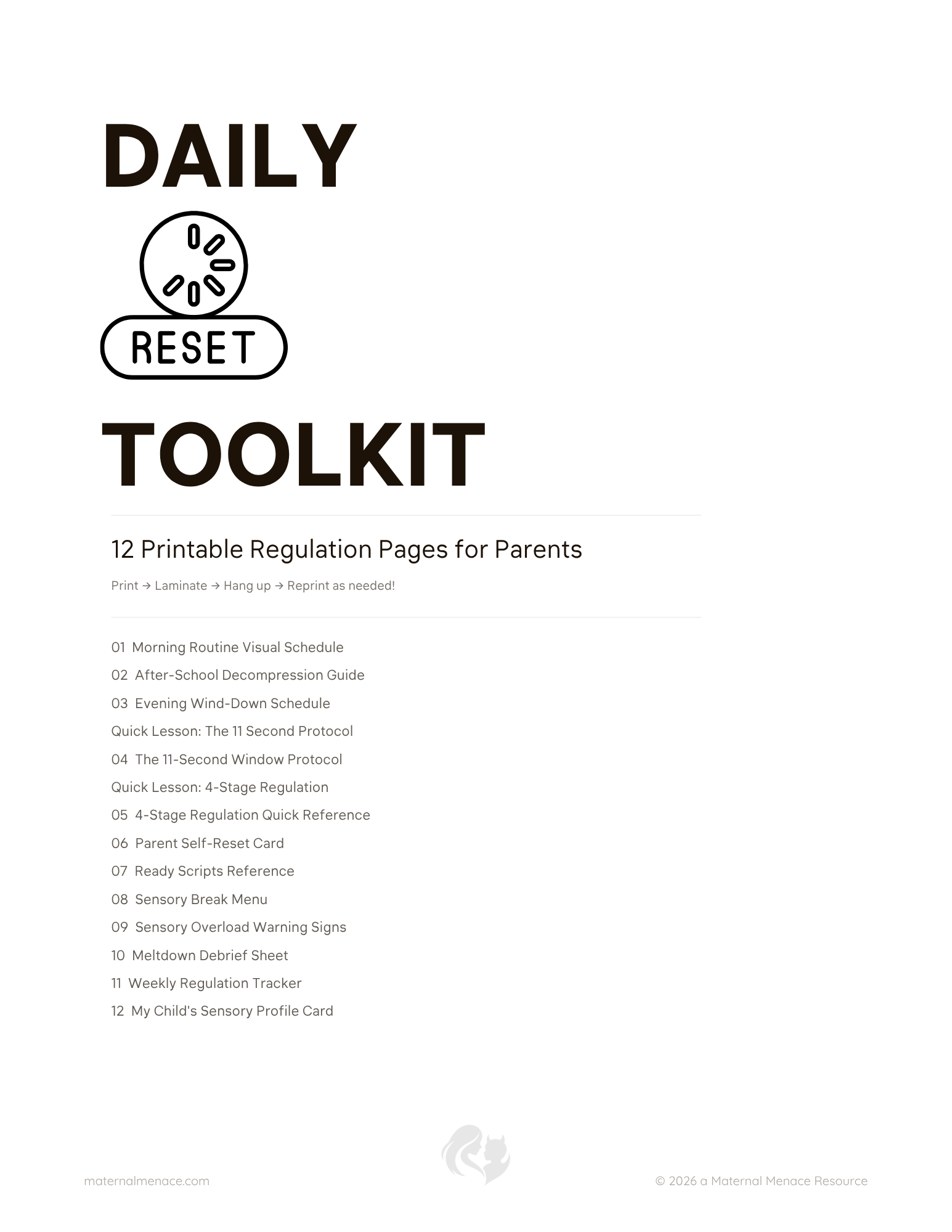
Help create calmer routines with this free Daily Reset Toolkit featuring 12 printable regulation pages for parents, including visual schedules, sensory supports, trackers, and quick-reference guides.
Support calmer days with this free Daily Reset Toolkit for parents. This printable collection includes 12 practical regulation pages designed to help families build predictable routines, navigate transitions, recognize signs of sensory overload, and support emotional regulation throughout the day.
Whether you're parenting a neurodivergent child or simply looking for structured daily supports, these printable resources are designed to be practical, easy to use, and reusable. Print them, laminate them, hang them up, and use them whenever your family needs a reset.
What you'll learn
Build calming morning and evening routines.
Create smoother after-school transitions.
Recognize early signs of sensory overload.
Support emotional regulation with simple strategies.
Use visual schedules and reference guides throughout the day.
Track regulation patterns to better understand your child's needs.
Quick Tip: Keep frequently used pages somewhere visible—like the refrigerator, a bedroom door, or a family command center. Consistency helps routines become familiar and easier to follow over time.
Disclaimer: This toolkit is intended for educational and informational purposes only and is not a substitute for medical, psychological, or therapeutic advice. Every child has unique needs. Consult your child's healthcare provider or therapist for individualized recommendations.
Found this helpful?
Share it with a friend, family member, or caregiver who might benefit.
New free resources are added regularly to the Maternal Menace Resource Library.
Time Management & Goal Setting
Learn simple time management and goal-setting strategies that help children, teens, parents, and adults stay organized, reduce stress, and achieve goals one step at a time.
Managing your time doesn't mean staying busy every minute—it means using your time wisely. This free guide shares practical strategies to help children, teens, and adults stay organized, reduce stress, and build healthy habits that make reaching goals feel more achievable.

What you'll learn
How to set realistic goals using the SMART Goal method
Simple ways to prioritize daily tasks
Tips for staying focused and avoiding procrastination
How to break large goals into manageable steps
Easy habits that improve organization and productivity
Quick Tip: Instead of making a long to-do list, choose your Top 3 priorities each day. Completing your most important tasks first helps build momentum and prevents feeling overwhelmed.
Related resources will be added as our library continues to grow.
Disclaimer: This resource is intended for educational purposes only and should not replace professional educational, mental health, or medical advice. Every person learns differently, so use the strategies that work best for your individual needs.
Found this helpful?
Share it with a friend, family member, or caregiver who might benefit.
New free resources are added regularly to the Maternal Menace Resource Library.
How Sam Learns: Study Tips That Actually Worked for Me
Everyone learns differently. Discover the real-life study techniques that helped me remember complex information, reduce test anxiety, and study smarter—not longer.
Everyone learns differently, and that's okay. These are the study techniques that helped me remember everything from pharmacy technician medications to beauty school concepts. Instead of focusing on memorization alone, I learned by writing things down, organizing information, understanding the "why," and making connections. Whether you're a student, lifelong learner, or just trying to remember more, these simple strategies might help you too.

What you'll learn
Study methods that worked for one real learner
How writing things down improves memory
Why understanding concepts beats memorization
Tips for organizing information more effectively
Simple ways to retain information long-term
How to study smarter instead of longer
Quick Tips: If you're overwhelmed, don't try to memorize everything at once. Focus on understanding one concept at a time, then build connections between topics. Small, consistent study sessions usually work better than cramming.
😌 Don't Stress the Test
The more I worried about failing, the harder it was to remember.
Once I started treating quizzes like "just another day," my memory worked much better.
Confidence > Panic.
Related resources will be added as our library continues to grow.
Disclaimer: This resource is based on personal experience and is intended for educational purposes only. Every person learns differently, so experiment with different study techniques to discover what works best for you.
Found this helpful?
Share it with a friend, family member, or caregiver who might benefit.
New free resources are added regularly to the Maternal Menace Resource Library.
Fall & Winter Safety Tips for Children with Neurodivergence
Cooler weather brings new routines and unique safety considerations. This free infographic shares practical fall and winter safety tips for neurodivergent children and their families.
As temperatures drop and routines change, neurodivergent children may experience new sensory challenges, seasonal illnesses, holiday disruptions, and outdoor safety concerns. A little preparation can help make the colder months safer and less stressful.
This free infographic provides practical fall and winter safety tips for autistic, ADHD, and other neurodivergent children, helping families navigate seasonal changes with confidence.

What you'll learn
Dressing for changing weather
Cold weather and frostbite prevention
Safe outdoor play
Holiday and sensory overload planning
Illness prevention and healthy habits
School routine transitions
Fire and heating safety
Emergency preparedness during winter weather
Quick Tip: Keep a small "go bag" ready with weather-appropriate clothing, comfort items, snacks, medications (if needed), and sensory supports so you're prepared for changing plans or unexpected outings.
Click Here For Summer Safety Tips
Disclaimer: This resource is intended for educational purposes only and should not replace medical, therapeutic, or emergency safety advice. Every child has unique needs, and families should make decisions based on their child's individual circumstances.
Found this helpful?
Share it with a friend, family member, or caregiver who might benefit.
New free resources are added regularly to the Maternal Menace Resource Library.
Summer Safety Tips for Children with Neurodivergence
Summer brings new adventures—and new safety challenges. This free infographic shares practical tips to help keep neurodivergent children safe, comfortable, and prepared during the warmer months.
Summer routines often look different from the rest of the year, which can be exciting but also challenging for neurodivergent children. Changes in schedules, increased outdoor activities, heat, crowds, and sensory input may require extra planning.
This free infographic provides practical summer safety tips to help families support autistic, ADHD, and other neurodivergent children while enjoying the season safely and confidently.

What you'll learn
Heat and sun safety
Water safety reminders
Wandering and elopement prevention
Managing sensory overload
Staying hydrated
Planning for outings and vacations
Playground and outdoor safety
Emergency identification and communication tools
Quick Tip: Prepare for outings by bringing familiar comfort items, water, snacks, sunscreen, headphones or other sensory supports, and reviewing the day's plan together when appropriate.
Related resources will be added as our library continues to grow.
Disclaimer: This resource is for educational purposes only and is not a substitute for professional medical, therapeutic, or safety advice. Every child has unique needs, and families should make decisions based on their child's individual abilities and circumstances.
Found this helpful?
Share it with a friend, family member, or caregiver who might benefit.
New free resources are added regularly to the Maternal Menace Resource Library.